

The Bureau of Industry and Security is demanding more sophisticated compliance judgments from exporters while retreating from the education and engagement that help companies make them, according to a recent commentary from CSIS.
The CashApp parent accrued $764 million as of September 30 but cautioned that final terms could produce additional losses. The company also reported that SEC staff closed a separate investigation in March 2026 without recommending enforcement action.
The Amidi case shows why investors must assess reporting duties before closing. A newly published rules expansion proposal adds a second task: preparing for broader coverage while complying with existing rules.
The company discovered the provisions during an internal review after learning that the customer appeared on the Office of Antiboycott Compliance’s March 2024 Requester List. It voluntarily disclosed the requests, cooperated with the investigation, and introduced an automated screening tool.

On November 6, 2026, the Financial Crimes Enforcement Network (FinCEN) announced an order prohibiting U.S. financial institutions from transmitting funds to or from MEXC Global, a convertible virtual …
The lawsuit moves scrutiny of TD’s compliance failures beyond the branch employees prosecuted for facilitating money laundering to the disclosures and oversight responsibilities of senior management.
Jensen’s plea, following his September 2026 extradition from Panama, underscores the enduring reach of FCPA enforcement: individual defendants can face prosecution years after their employers settle.

The case shows how delayed disclosure and unresolved sanctions warnings can turn a modest sales account into a multimillion-dollar enforcement matter. Extreme’s cooperation and remediation secured DOJ’s first “near miss” non-prosecution agreement, but reporting only after a journalist presented new evidence cost it eligibility for a declination.

U.S. prosecutors have brought an alleged cryptocurrency scam money launderer from the Netherlands to a California courtroom, advancing a case involving more than $36.9 million in victim funds routed through U.S. bank accounts, a Bahamian bank, and stablecoin wallets to Cambodian scam operators.

A Miami-area cryptocurrency broker faces a federal money laundering conspiracy charge over his alleged role in a Russian network that converted drug proceeds into cryptocurrency and bank payments through an international system of brokers and cash couriers.
The Justice Department is seeking approximately $290.4 million in unpaid duties and fraud penalties from Uni-Tile & Marble Inc. and its chief executive officer, Xin Mian Pan, in a civil customs enforcement action that examines their alleged role in imports entered through other companies.

A Russian national extradited from Sweden faces federal charges for allegedly using a Hong Kong electronics company to obtain U.S. components for Russian customers, conceal their ultimate destination, and finance purchases through overseas bank accounts.

Sasa Micev, a Bosnian national, was sentenced to five years in federal prison after pleading guilty to violations of the International Emergency Economic Powers Act and the North Korea Sanctions Regulations arising from an attempted purchase of North Korean anti-aircraft missiles, the Justice Department announced October 14, 2026.
OFAC’s $175,015 settlement with Pegasus Worldwide Logistics underscores that sanctions exposure extends beyond deficient screening to incomplete responses during an investigation. The freight forwarder failed to identify a designated supplier despite matching contact information, then took six months to provide a complete subpoena response, prompting six separate reporting violations.
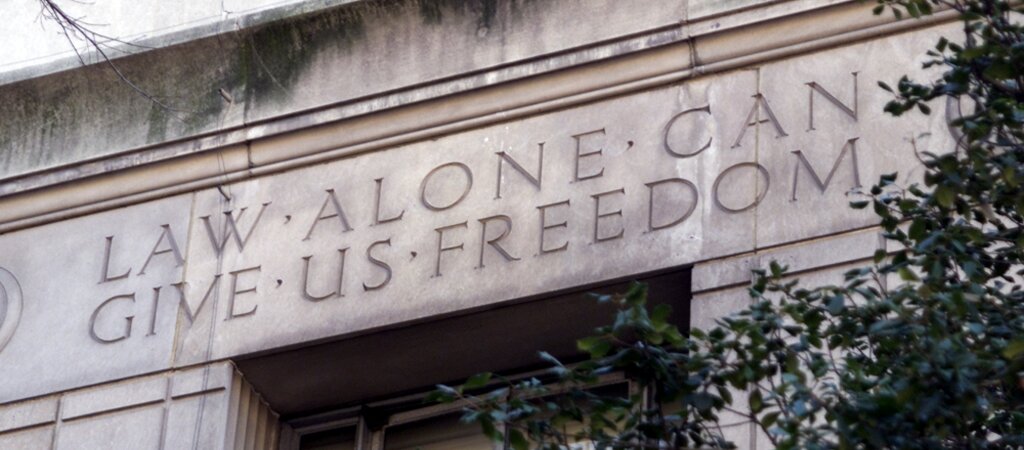
The directive signals that trade-fraud and qui tam matters may no longer remain discrete civil investigations. Allegations involving unpaid duties, false origin claims, undervaluation, misclassification or forced labor may prompt parallel criminal, tax, securities and asset-forfeiture inquiries.

The case illustrates how an AML program can fail when its risk assessment does not reflect its core business. Regulators found that American Express gave insufficient attention to its dominant credit and charge card operations, allowing weaknesses in customer due diligence, transaction monitoring and reporting to persist for years.

The case shows that even a small investment through an overseas subsidiary can expose a U.S. parent to substantial penalties. Treasury fined Amidi more than twice the underlying investment’s value for a missed notification, underscoring the need for investors and counsel to identify covered transactions across foreign funds and subsidiaries, document their diligence and meet filing deadlines—even when an investment is permitted.

Another former TD Bank branch employee has pleaded guilty to taking bribes to help launder millions of dollars to Colombia, extending a series of prosecutions that has targeted tellers, retail employees and an assistant branch manager while producing no criminal charges against senior bank executives.
Foreign bribery enforcement remains active across multiple jurisdictions, with hundreds of investigations pending and exposure extending to companies, individuals, and related accounting and money-laundering offenses, according to the OECD’s enforcement report covering 1999 through 2025.
Lambda Research Corporation, a Massachusetts optical-design software company, admitted conduct underlying 66 export-control violations in a settlement with the U.S. Commerce Department’s Bureau of Industry and Security. The October 2 order imposes a $2 million civil penalty but suspends payment for one year.