
Reuters news service reported the Biden administration plans to unveil a new rule next month that will expand U.S. powers to stop exports of semiconductor manufacturing equipment from some foreign countries to Chinese chipmakers, two sources familiar with the rule said.
The Departments of State and Commerce are each issuing separate but complementary proposed rules regarding personal services to foreign defense and intelligence activities. State's review of "defense service" in the ITAR focused on identifying activities of U.S. persons that provide a critical military or intelligence advantage such that they warrant control under the ITAR and are activities that are not currently subject to the ITAR; or are controlled under the ITAR, but the current control language would benefit from additional clarity..

A joint resolution of Congress to void and nullify the Commerce Department's “Revision of Firearms License Requirements” (89 Fed. Reg. 34680) passed out of the House Committee on Foreign Affairs July 11 on a vote of 24 to 23. Sponsored by Rep. Mark Green (R-Tenn), the motion is a companion to his“Stop the Bureaucratic Ineptitude Shuttering Respectable and Upstanding Lawful Exporters Act” or the “Stop the BIS Rule Act” (HR 8208) introduced in May.

Commerce released two new proposed rules governing military and intelligence end uses and end users, including activities by U.S. persons, as well as amendments to the EAR controls on Foreign-Security End Users (FSEUs) and expanding controls on activities of “U.S. persons.” BIS is proposing amendments to control “support” furnished by “U.S. persons” to identified foreign- security end users. These rules propose to implement the broadest expansion of presidential export control authority since the Export Control Reform Act (ECRA) was signed in August 2018.

July 24 the Bureau of Industy and Security published a Final Rule formalizing the changes to the Export Administration Regulations imposed by Congress in the emergency supplemental appropriation [HR 815] signed into law April 24th. As a result of this new FDP Rule, exporters require a U.S. Government authorization for transfer of these items when produced outside the United States with certain U.S. technology, software, or production equipment when exports are destined to Iran or for use in connection with certain equipment destined to Iran, even when such items were never exported from the United States.
On July 18, 2024, the Bureau of Industry and Security published an interim final rule that revised the Export Administration Regulations (EAR). That rule inadvertently revised language related to recent changes to the Entity List. This document corrects the inadvertent revisions introduced in the July 18, 2024, rule.
The long-awaited Standards Rule has been published by the Commerce Department, revising Export Administration Regulations to facilitate US industry participation in international standards setting bodies. In this rule, the Bureau of Industry and Security (BIS) amends the Export Administration Regulations (EAR) to revise the scope and the terms used in the EAR to describe “standards-related activities” that are subject to the EAR. As we reported last month [12385] lack of clear guidance from Commerce has chilled come companies' participation for fear of running afoul of export controls.
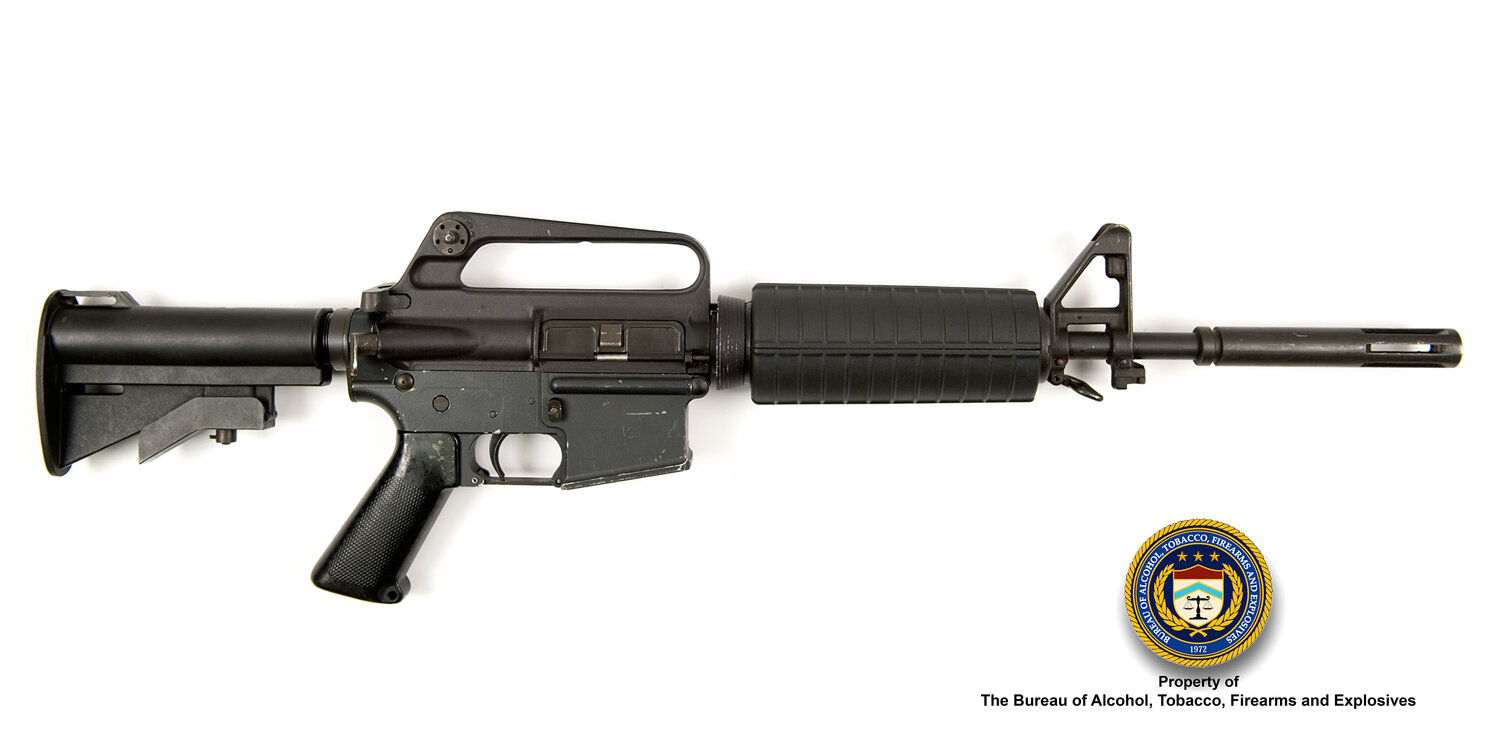
Sen. Elizabeth Warren (D-Mass) and Rep. Joaquin Castro (D-Texas) are calling on the Commerce Department to beef up its new rule on firearms license requirements in order to prevent US weapons exports from contributing to violence and killings across the globe. The lawmakers are responding to an interim final rule issued in April by Commerce’s Bureau of Industry and Security, which strengthened Commerce’s exports licensing requirements and regulations. But there are still critical weaknesses to the rule, the lawmakers said in a letter to Commerce Secretary Gina Raimondo.
The Commerce Department has published a Final Rule redesignating regulations governing the review of certain transactions involving information and communications technology and services (ICTS) from the Secretary of Commerce to the Bureau of Industry and Security (BIS), Office of Information and Communications Technology and Services (OICTS). The rule is intended to cover ICTS designed, developed, manufactured, or supplied by persons owned by, controlled by, or subject to the jurisdiction or direction of a foreign adversary and which pose or may pose undue or unacceptable risks to the United States or U.S. persons.
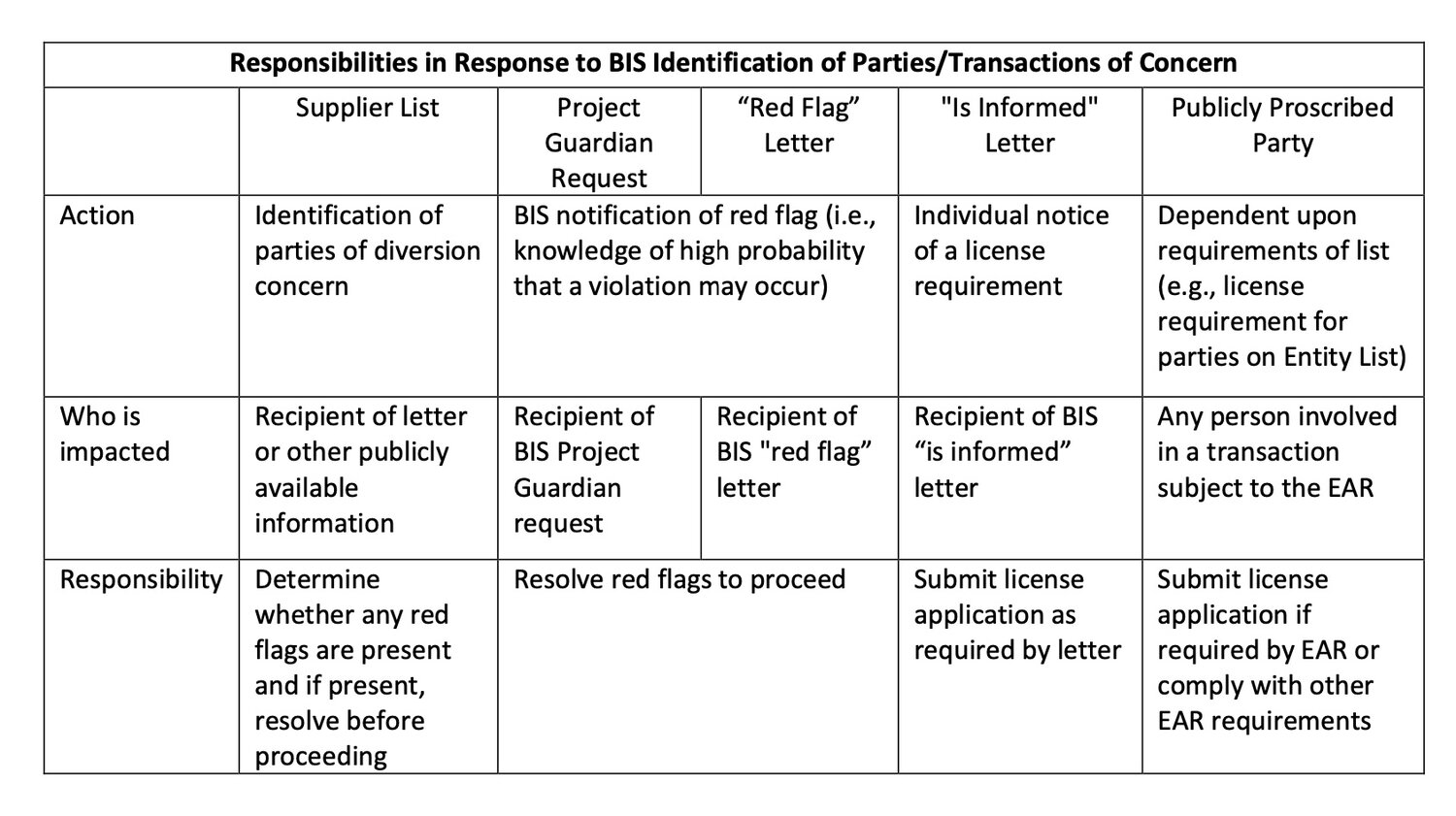
Commerce’s Bureau of Industry and Security (BIS) published guidance outlining the different actions that BIS takes to inform industry and academia about parties – beyond those identified on public screening lists like the Entity List – that present risks of diversion of items subject to BIS export controls to countries or entities of concern. Thew guidance also contains a new recommended best practice asking that exporters, reexporters, and transferors of Common High Priority List (CHPL) items screen transaction parties using online resources made newly available by the Trade Integrity Project (TIP).

The Commerce Department’s Bureau of Industry and Security (BIS) added six companies to the Entity list Tuesday, four for their involvement in training Chinese military pilots in NATO tactics. BIS also added two UAE- based entities to the Entity List because they repeatedly engaged in “dilatory or evasive conduct, including the provision of false, misleading, or incomplete information, during end-use checks.”
The Commerce Department’s Bureau of Industry and Security (BIS) expects to issue a final rule this Summer revising the Export Administration Regulations (EAR) to authorize the release of certain technology and software in the context of standards setting and development in standards organizations. Much of the rulemaking activity was initiated in response to the Huawei sanctions and US firms' continued participation in 5G telecoms standards negotiations. The Bureau published the interim rule in June of 2020, incorporating comments in a follow on interim rule two years later.
BIS Published the final rule announced last week as part of the Administration's participation in the G7 summit. The bulk of the rule is as displayed last week, though the published version adds additional EAR 99 software to coordinate with allies,

The new Iran Foreign Direct Product rules go into effect next month, and the unusual way the rule was imposed may have left some practitioners unprepared. Enacted by Congress with no input from the Deparetment of Commerce, the provisions of (HR. 6603) introduced by Rep. Nathaniel Moran (R-TX) were included in the massive emergency supplemental appropriation [HR 815] signed into law April 24th. "This is the first time in the history of Congress that it passed a bill to codify a foreign direct product rule," Mr. Moran's office stated.

The Department of Commerce’s Bureau of Industry and Security (BIS) has imposed a three-year denial order against a Portland, Oregon, package forwarding service prohibiting the firm from from participating in all exports under BIS jurisdiction from the United States. “If a forwarding company – with an entire business model based on exports – fails to implement an adequate compliance program even while subject to a suspended denial order, it should not be able to export items subject to the EAR from the United States,” said Assistant Secretary for Export Enforcement Matthew S. Axelrod.

In coordination with the Departments of Treasury and State, the Commerce Department’s Bureau of Industry and Security (BIS) is announcing several significant additional export control restrictions and related actions against Russia.. Among the actions is the issuance of a final rule imposing additional export control measures against Russia and Belarus by expanding the scope of items identified under two EAR supplements that are subject to the EAR’s Russian and Belarusian industry sector sanctions; imposing a “software” license requirement for certain EAR99-designated “software” when destined to or within Russia or Belarus; and narrowing the scope of commodities and software that may be authorized for export, reexport, or transfer (in- country) to or within Russia or Belarus under License Exception Consumer Communications Devices (CCD).
This report documents defense articles and defense services licensed for permanent export to each foreign country and international organization during fiscal year 2023.
Bureau of Industry and Security (BIS) imposed a civil penalty against Airbus DS Government Solutions Inc., a Texas-based satellite communications and networking systems company for shipping trade show materials to Kuwait certifying that the goods were not of Israeli origin and not manufactured by a company on the “Israeli Boycott Blacklist.” In November 2023 BIS announced a civil penalty of $44,750 against Forta LLC (Forta), a manufacturer of synthetic reinforcement fibers, for similar trade show infractions

A senior Treasury Department official called for European allies to line up in applying pressure to Beijing to cease supporting the Kremlin's war efforts. Citing the Russian econmy's "war footing," Deputy Secretary of the Treasury Wally Adeyemo said "this war is not just an existential threat to Ukraine, but to Europe and our national security."

China has announced export controls on certain equipment, software and technologies in key sectors ranging from aerospace to shipbuilding that matter to national security. Under the new policy, the controlled export products involve equipment and software in key industries, including aerospace structural components and engine manufacturing, gas turbine engine manufacturing, aerospace surface window-related equipment, and ultra-high molecular weight polyethylene fiber-related items, according to the notice.