

The Commerce Department’s brief export-control action against Anthropic has moved deemed exports from a specialized compliance doctrine to a frontline issue for AI companies.

Commerce’s June 30 withdrawal keeps Anthropic’s Fable 5 and Mythos 5 available, but it also confirms that BIS is prepared to use export-control tools against frontier AI model access when cyber capabilities raise diversion risks.
The Commerce Department’s Entity List additions have slowed to their weakest pace since 2008, marking a sharp break from recent U.S. export-control practice, according to a new CSIS analysis.
The bipartisan Export Control Enforcement and Enhancement Act would put a 30-day clock on interagency votes over Entity List changes, seeking to make the Commerce Department’s chief end-user restriction tool faster and harder to stall.
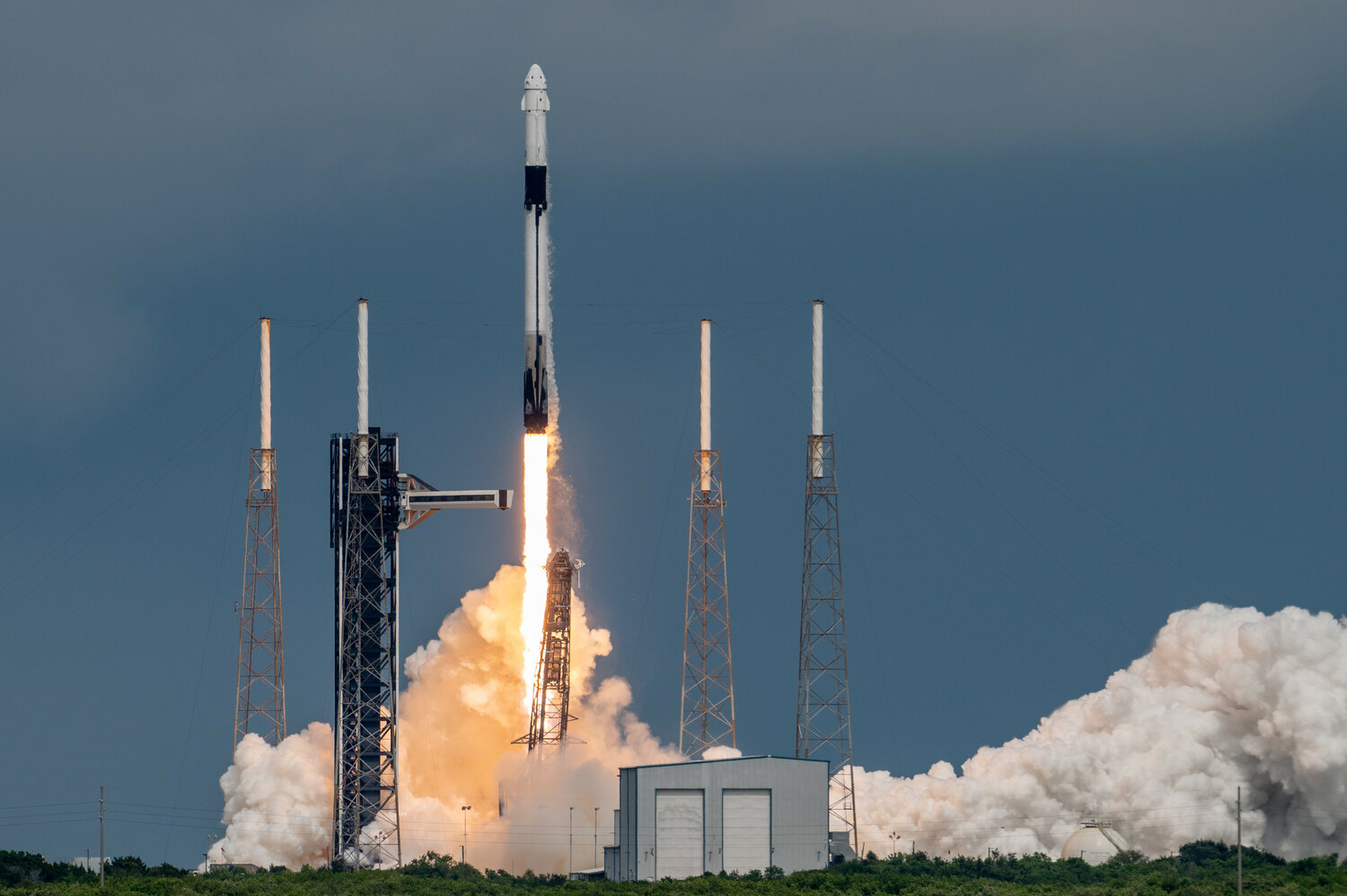
The State Department has sent a long-running rewrite of International Traffic in Arms Regulations controls on launch vehicles, missiles, rockets, spacecraft and related articles to the White House Office of Information and Regulatory Affairs, signaling that a final or near-final version of the rule may be approaching publication.
A bipartisan Senate bill would sharply raise the cost of export-control violations, reflecting growing congressional concern that existing penalties are too low to deter unlawful transfers of sensitive U.S. technology.

The legislation would add a reporting tool to the emerging U.S. effort to police access to advanced AI computing power, not just the sale of chips. The two bills reflect a shift in export-control policy from tracking physical chip shipments to controlling who can use U.S. AI infrastructure and how misuse is detected.

The European Commission’s latest dual-use export control report shows a larger but more closely documented EU licensing system. The report underscores Brussels’ broader push to tighten Russia-related restrictions, improve national licensing coordination, and build a more transparent enforcement record.
The Netherlands’ pushback against expanded U.S. semiconductor-equipment controls shows the strain in Washington’s tech-security coalition: the United States is asking allies to tighten restrictions that fall heavily on their own national champions, even as it uses public money and equity-style investments to build domestic alternatives.
The Bureau of Industry and Security is seeking public comment on four existing information collections covering export-control record retention, technology-export license support and antiboycott compliance.
A broad deemed-export approach could require companies to classify AI-related technology, screen personnel by nationality, segregate model access, seek licenses and audit internal use in ways many software companies have never had to do.

Bosch avoided criminal prosecution by voluntarily disclosing and remediating the Huawei shipments, but the $36 million BIS penalty shows that the Huawei Foreign Direct Product Rule remains a powerful extraterritorial enforcement tool reaching foreign-made commercial components sold by non-U.S. subsidiaries.
The delay shows how U.S. export-control enforcement is being pulled between national security findings and trade diplomacy with Beijing
The issue is whether U.S. arms controls built to protect sensitive defense technology can accommodate a wartime demand for speed, scale and allied production. Schimpf's call for an ITAR “reset” reflects growing pressure from Ukraine and Middle East conflicts, where commercially derived systems are being fielded in large numbers faster than traditional defense procurement and export-control processes can support.
The bill gives Congress a concrete role in turning Pillar II from a technology-sharing aspiration into an operational program. Ricketts and Kaine are trying to remove MTCR-related licensing barriers that could slow exactly the kinds of autonomous, hypersonic, guided-weapons and advanced payload work the pact is meant to accelerate.
The order marks a sharp escalation in U.S. AI controls, moving beyond chips and cloud access to restrict use of frontier models themselves. By forcing Anthropic to bar foreign nationals from its most powerful systems, including employees and customers inside the United States, the government is treating model capability as a controlled national-security asset. The move could reshape AI export compliance, but it also raises immediate questions over enforceability, allied access and whether broad nationality-based limits could weaken legitimate cybersecurity research.
The State Department is proposing to ease ITAR Part 130 reporting requirements by doubling key disclosure thresholds and shifting most political contribution and fee or commission reporting from transaction-by-transaction submissions to annual reports. The rule would reduce paperwork for defense exporters, brokers and suppliers while retaining disclosure obligations for larger payments and later-discovered reportable information.

Top artificial-intelligence executives and biosecurity specialists are urging Congress to require screening of synthetic DNA and RNA orders, warning that AI could lower the technical barriers to developing biological weapons.
Trade compliance is no longer divided into clean import, export-control, and sanctions lanes. Export-control tools are appearing in sanctions programs; sanctions-style diligence is becoming essential in forced-labor and origin reviews; and tariff classifications once used mainly to set duty rates now can determine whether an export is lawful.

China’s outbound-investment rules mark an expansion of Beijing’s technology-control playbook. China is no longer only the object of foreign technology restrictions; it is preparing to act as a gatekeeper for technologies in which it has become globally competitive.