
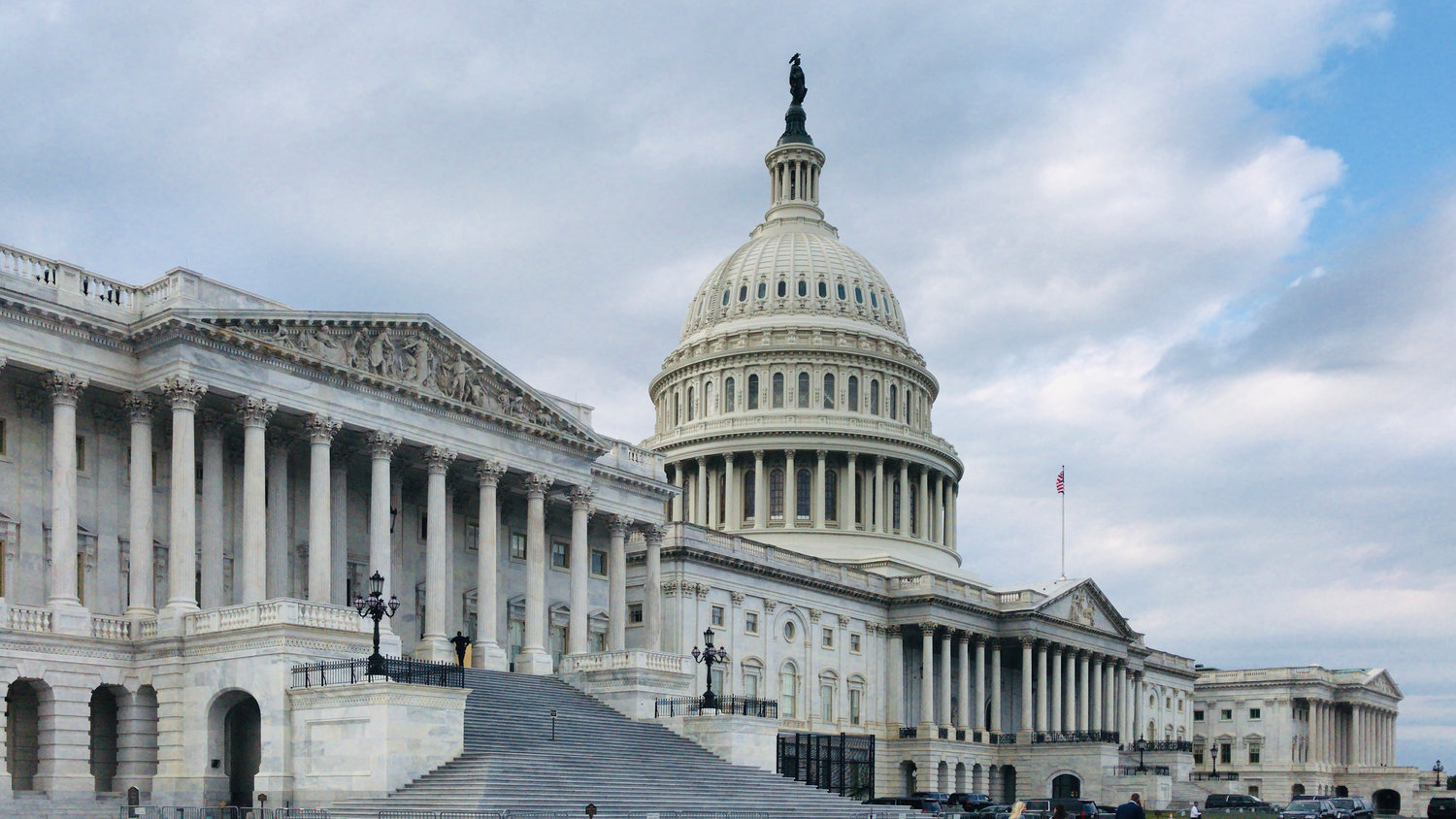
Reps. Jefferson Shreve (R-IN) and Sydney Kamlager-Dove (D-CA) on Jan. 9 introduced bipartisan legislation aimed at strengthening the technical workforce of the Bureau of Industry and Security, addressing concerns about bureau's capacity to enforce export controls.
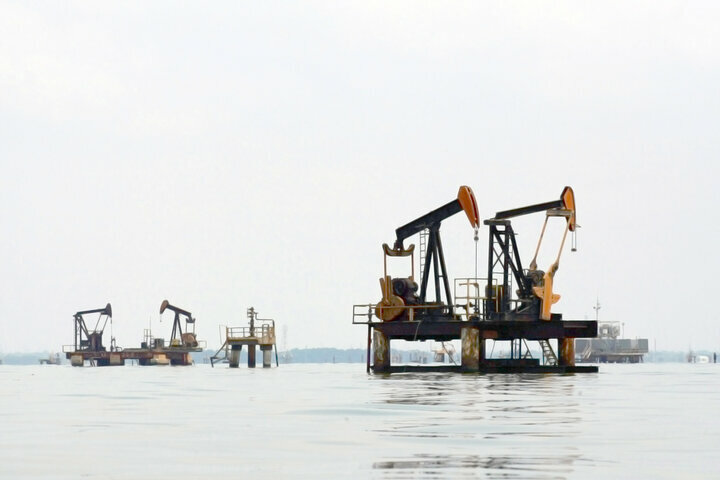
The removal of Nicolás Maduro on January 3, 2026 has altered Venezuela’s political facts and reopened conversations about U.S. commercial engagement. But for American companies, the change is more contextual than legal. The sanctions framework governing Venezuela remains largely intact, and corporate decision-making continues to turn on licensing, counterparties, and bank risk appetite—not diplomatic signaling.

The European Council on Friday authorized the signature of the long-delayed EU-Mercosur Partnership Agreement and an accompanying Interim Trade Agreement, clearing a major procedural hurdle in negotiations that began in 1999 and were concluded in December 2024.

On January 8, U.S. Vice President JD Vance announced that the Trump administration intends to establish a new Department of Justice division dedicated to national fraud enforcement, according to a White House factsheet. The proposed division would centralize and coordinate federal fraud investigations and prosecutions across jurisdictions, with a focus on fraud affecting federal programs and benefits, as well as misconduct involving businesses, nonprofits, and private individuals nationwide.
The U.S. House of Representatives on Thursday approved a multibillion-dollar funding package for the Departments of Commerce, Justice, and Interior and several related agencies, voting 397–28 as lawmakers sought to avert a partial government shutdown ahead of a January 30 funding deadline.
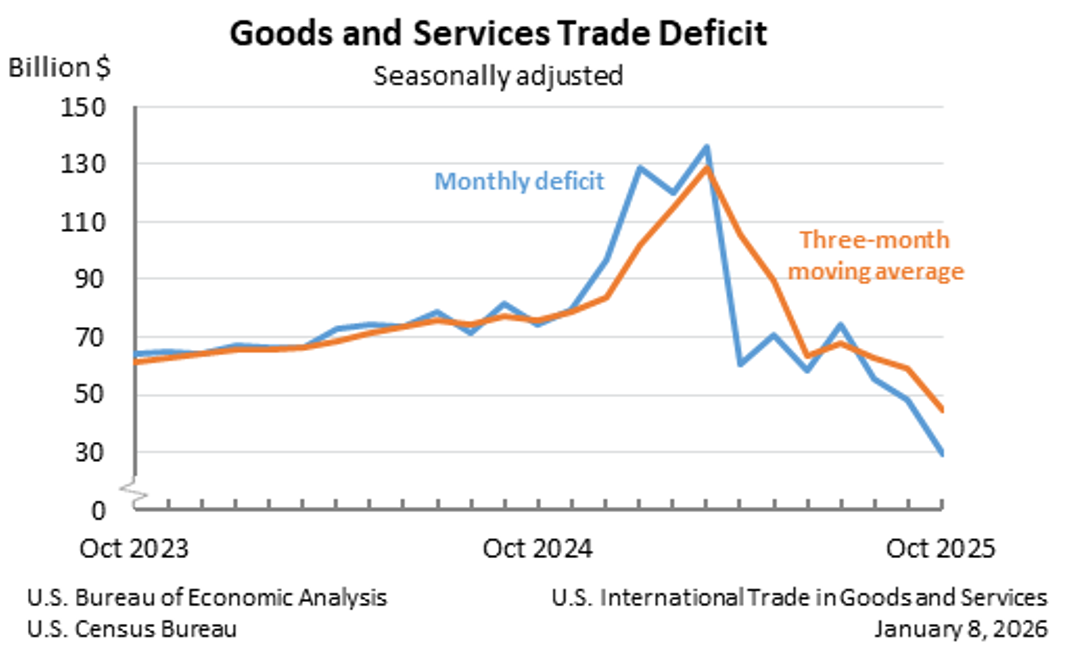
The United States posted its smallest monthly trade deficit in 16 years in October, as falling pharmaceutical imports and a sharp increase in gold exports combined to produce a steep narrowing in the external gap, according to data released Thursday by the U.S. Census Bureau and the U.S. Bureau of Economic Analysis.
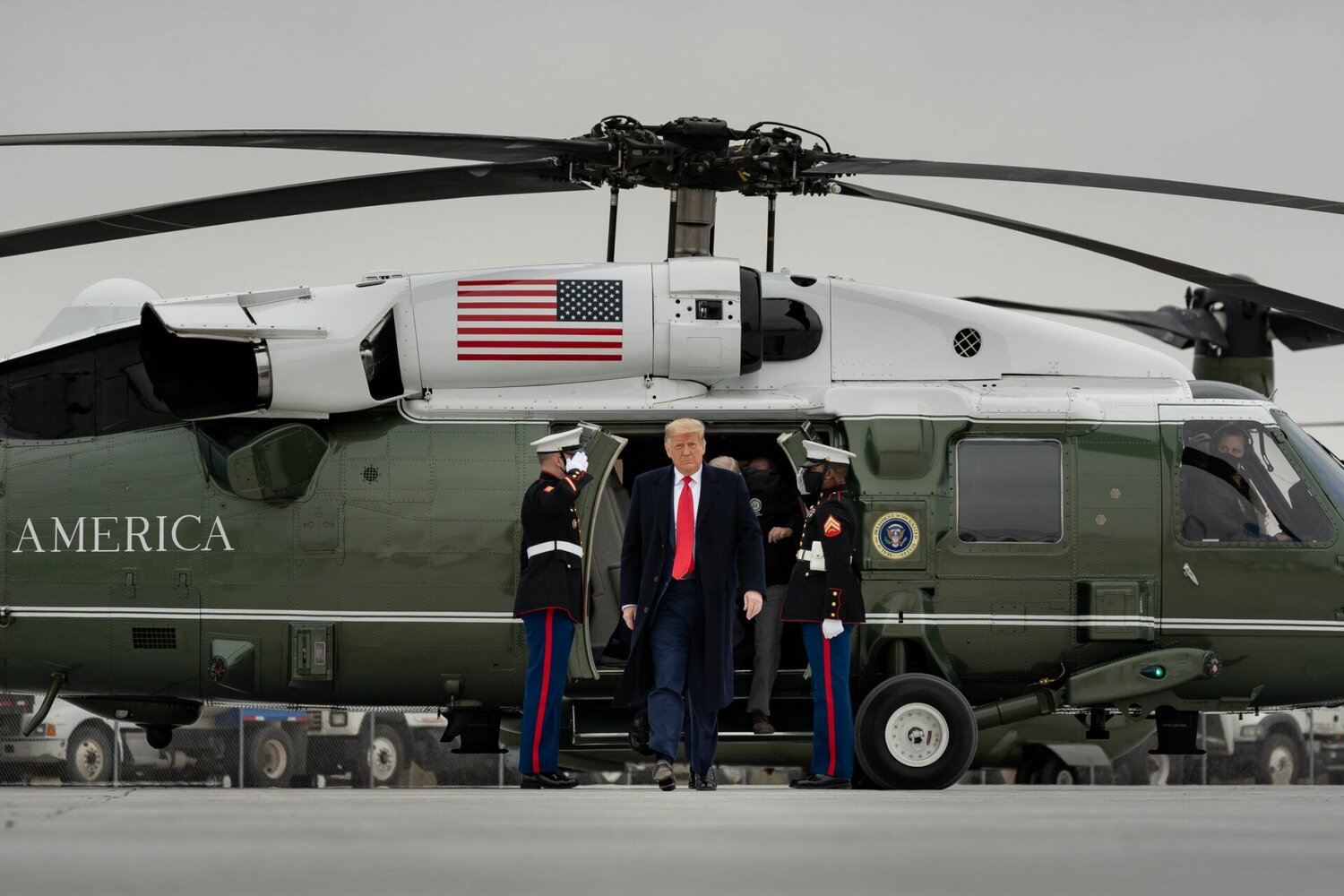
President Trump used his social media holdings to make a series of substantive proclamations on trade and economic security this week, from threatening India with more duties, assuming command of Venezuelan oil marketing, and "the upcoming Tariff decision, one of the most important ever, of the United States Supreme Court".
Japan is moving to establish a cross-ministerial foreign-investment screening body modeled on the U.S. Committee on Foreign Investment in the United States, marking a further tightening of Tokyo’s economic-security architecture.
The United Kingdom on Dec. 11 formally acceded to the Agreement on Defence Export Controls, joining France, Germany and Spain in a framework intended to streamline export licensing for multinational defence programmes while leaving national control regimes intact.
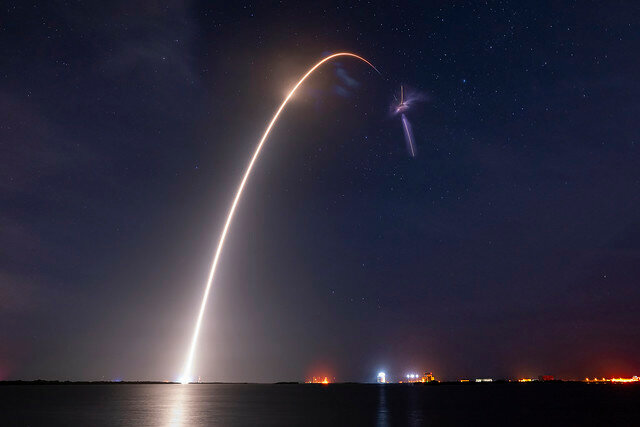
As satellite launches surge toward 1.7 million by 2030, astronomers and space companies are turning to multilateralism to mitigate satellite brightness and radio interference and keep astronomy alive.
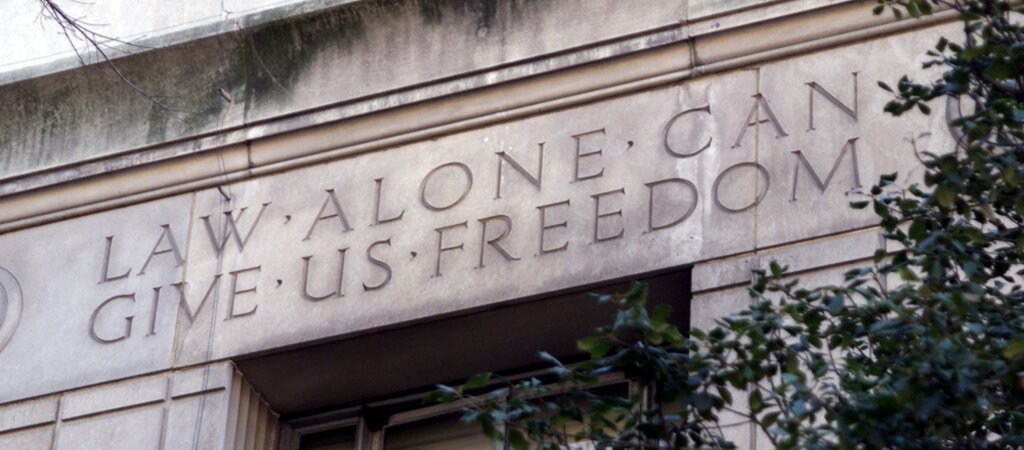
U.S. enforcement of sanctions, anti-money-laundering, and anti-corruption laws shifted in 2025, with lower aggregate penalties, narrower prosecutorial pipelines, and explicit policy guidance signaling a more selective approach across several agencies.
The Group of Seven has agreed to a revised approach to the global minimum tax that accommodates U.S. demands on tax sovereignty, following White House pressure and parallel negotiations at the OECD. Congressional Republicans warned that retaliation remains an option if other countries delay implementation.
U.S. Trade Representative Jamieson Greer used a wide-ranging appearance at the Atlantic Council to articulate the Trump administration’s trade negotiating strategy as the United States approaches a pivotal period of tariff litigation, global rebalancing, and the mandated six-year review of the United States–Mexico–Canada Agreement (USMCA).
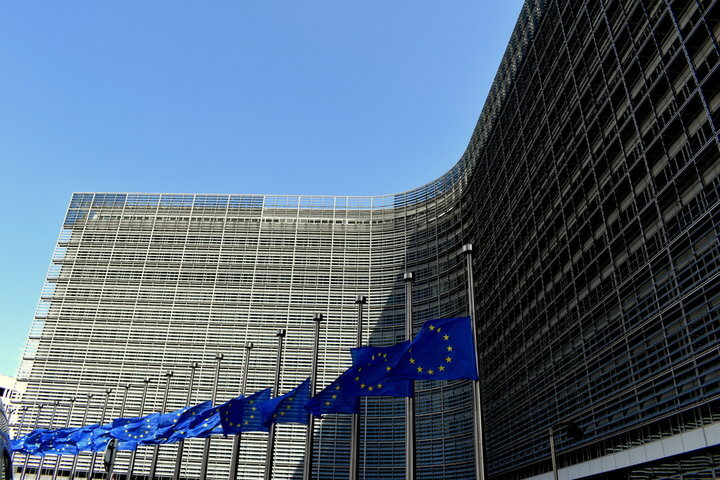
The European Union has hardened its economic-security posture amid rising concern that trade, investment, and technology ties are increasingly being leveraged for coercive ends. A new Commission–High Representative Communication warns that the EU faces “increasingly serious threats” from trading partners, including deliberate trade disruptions, weaponisation of dependencies, and predatory practices affecting critical supply chains.

President Donald Trump has signed the Fiscal Year 2026 National Defense Authorization Act (NDAA) into law, enacting a sweeping defense policy statute that authorizes more than $900 billion in national defense priorities while significantly expanding U.S. authorities over investment security, export controls, sanctions, and defense trade. The law represents one of the most consequential structural shifts in U.S. national security legislation in decades, embedding economic and technological controls directly into the core of defense law.
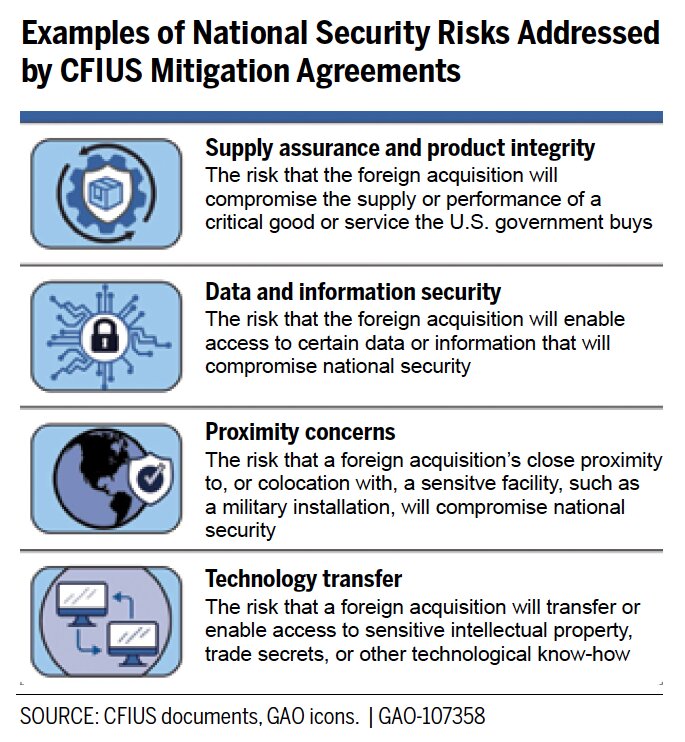
President Trump on January 2 ordered a California spinoff to divest its interests in certain semiconductor assets purchased in 2024 from its former parent, citing national security risks identified through a review by the Committee on Foreign Investment in the United States (CFIUS).. The 2024 transaction was not voluntarily filed with CFIUS, despite "credible evidence" that one of the owners is a Chinese citizen.

The Trump Administration announced a delay of planned tariff increases on imported upholstered furniture, kitchen cabinets, and vanities that were scheduled to take effect on January 1, 2026. In a separate development, the U.S. Department of Commerce sharply reduced proposed anti-dumping duties on Italian pasta producers following a preliminary review, according to statements from the Italian government.
The Office of the United States Trade Representative has issued a notice establishing updated U.S. dollar procurement thresholds under the Trade Agreements Act of 1979, effective January 1, 2026, for calendar years 2026 and 2027.
U.S. Customs and Border Protection will require nearly all customs refunds to be issued electronically under an interim final rule scheduled for publication Jan. 2, 2026. The rule takes effect Feb. 6, 2026, with limited waivers available for recipients who meet Treasury hardship criteria.

The Federal Communications Commission on Dec. 22 updated its Secure and Trusted Communications Networks “Covered List” to include uncrewed aircraft systems (UAS) and UAS “critical components” produced abroad, a move that blocks new FCC equipment authorizations for newly covered products and, in practice, bars new models from being imported, marketed, or sold in the United States.