

The measure shifts the EU customs model from national filings and uneven border controls toward common data, coordinated risk management and platform-level accountability.

The federal agency charged with helping protect civilian networks and critical infrastructure is reducing services and operating with a depleted workforce as adversaries increasingly use artificial intelligence to find weaknesses in essential systems.

The Trump administration’s campaign against diversity programs has drawn the headlines. Less visibly, a series of funding, immigration and national-security policies is dismantling the institutional compact that has governed American research since World War II.

Blank Rome attorneys Ken Nunnenkamp and Anthony Rapa say the 2025 data support a more selective approach to short-form declarations—and warn that aggregate statistics reveal less than dealmakers may think.
A U.S. House panel advanced bills Tuesday addressing supply-chain vulnerabilities, open-source artificial intelligence and consumer protection, including a proposal that would shield American businesses from foreign sustainability rules and could deepen regulatory tensions with Europe.
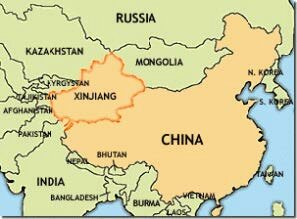
Supply chain compliance professionals face a two-track expansion of U.S. forced-labor policy: increasingly targeted UFLPA enforcement, reaching deep into industrial supply chains, and the administration’s use of forced labor to justify tariffs on 60 trading partners.

A series of White House and Commerce Department actions have combined export controls, tariffs, investment incentives and defense-sourcing rules to shift strategic metals production and processing toward the United States.
House passage gives the China trade-crime bill momentum, but without a current Senate companion or clear vote count, enactment likely depends on attaching it to a broader package.

Congress is being asked to evaluate an enrichment pathway without knowing whether the diplomatic condition offered as its strategic justification will ever be met. Saudi Crown Prince Mohammed bin Salman has said the kingdom would pursue a nuclear weapon if Iran acquired one.

The change matters because RPTAC has long provided industry with a formal channel for recommending revisions to the Export Administration Regulations and BIS licensing procedures. Recasting it as the Deregulation and Simplification Technical Advisory Committee signals a sharper focus on reducing regulatory complexity and compliance burdens, although BIS has yet to publish the committee’s charter, membership or specific priorities.

Canada advanced C$27.6 billion in counter-tariffs and C$7.5 billion in economic support this week as Washington weighed further penalties, leaving a narrow negotiating opening but no clear path to ending the trade dispute. Although Washington withdrew demands affecting Canadian language and cultural policies, major disagreements over automobiles, metals, dairy and national sovereignty remain unresolved, leaving the September 8 Canadian tariffs and the wider USMCA negotiations under growing uncertainty.
The bill seeks to address supply-chain gaps that can make it difficult for U.S. biotechnology companies to manufacture products domestically at scale.
Tariffs intended to rebuild American semiconductor manufacturing could also raise costs and restrict chip supplies for the data centers powering the U.S. artificial-intelligence boom.
Bill Gates warns that artificial intelligence could either expand opportunity worldwide or deepen inequality on an unprecedented scale. In a new essay, the Microsoft co-founder argues that AI differs from earlier technological revolutions because it can replace human cognition and may transform both white- and blue-collar work with unprecedented speed.
The agreement could unlock billions of dollars in U.S. nuclear exports to Saudi Arabia, but its classified terms leave Congress and the public unable to determine whether Riyadh could enrich uranium or would face safeguards as strict as those accepted by the United Arab Emirates, with major implications for nuclear proliferation, regional security and Trump’s effort to normalize Saudi relations with Israel.

The Commerce Department has failed to implement export-control authority Congress granted in 2022, according to a bipartisan group of senators and House members, leaving foreign intelligence and security agencies, including those in China and Russia, able to obtain American surveillance technology, artificial-intelligence tools and expert assistance.

USTR’s shift toward “superfakes” signals growing concern that increasingly sophisticated counterfeit goods are becoming harder for consumers, online platforms and enforcement agencies to distinguish from authentic products.
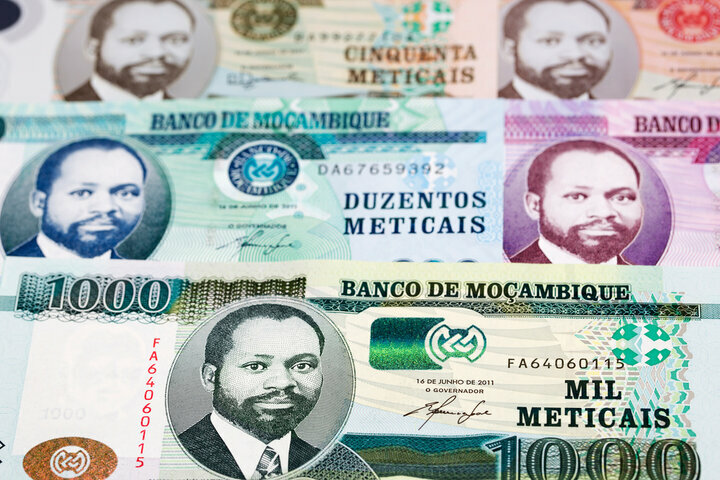
The ruling removes an immediate legal obstacle to Ex-Im’s largest-ever transaction and preserves the bank’s entire $4.7 billion Mozambique exposure, providing critical financing for TotalEnergies’ recently restarted $20 billion LNG development after nearly five years under force majeure.

House Democrats have intensified scrutiny of the Trump administration's decision to ease export controls on the United Arab Emirates, demanding records explaining the Commerce Department's determination that the UAE now qualifies as one of the United States' most trusted export-control partners.
The strategy does not immediately change federal law, funding or regulation, but it establishes a government-wide hierarchy that could shape future budgets, contracts, export controls, investment reviews and research-security requirements.