
World Trade Organization reform discussions on development, decision-making and “foundational issues” have resumed, although members remain divided. Despite the lack of consensus and the absence of a ministerial mandate from the 14th Ministerial Conference earlier this year, members are restarting the discussions with expectations of a different outcome under the same material conditions, according to people familiar with the developments.
China has floated a paper on how work at the World Trade Organization could support trade and investment integration, “thereby advancing industrialization,” in the Committee on Trade and Development.
The Trump administration declined Wednesday to renew the U.S.-Mexico-Canada Agreement in its current form, keeping the pact in force but opening a decade of annual reviews that could end with its expiration in 2036.

Senate Agriculture Committee Chairman John Boozman (R-Ark.) has released draft text for the Agricultural Act of 2026, giving the Senate its first full marker in the long-delayed Farm Bill fight and putting new emphasis on USDA trade promotion, export infrastructure and farm credit.
The Commerce Department’s Entity List additions have slowed to their weakest pace since 2008, marking a sharp break from recent U.S. export-control practice, according to a new CSIS analysis.
The bipartisan Export Control Enforcement and Enhancement Act would put a 30-day clock on interagency votes over Entity List changes, seeking to make the Commerce Department’s chief end-user restriction tool faster and harder to stall.

The summit showed Pax Silica moving from concept to operating platform: Washington expanded the U.S.-led AI and supply-chain initiative to 24 signatories, aligned a wider group of nearly three dozen economies behind a separate pro-growth AI statement, and paired the diplomacy with practical projects in shipping and workforce development.
A bipartisan Senate bill would sharply raise the cost of export-control violations, reflecting growing congressional concern that existing penalties are too low to deter unlawful transfers of sensitive U.S. technology.
Polestar, the Sweden-based electric-vehicle maker controlled by China’s Zhejiang Geely Holding Group, said the Commerce Department has denied its request for authorization to continue selling connected vehicles in the United States under the U.S. connected-vehicle rule.
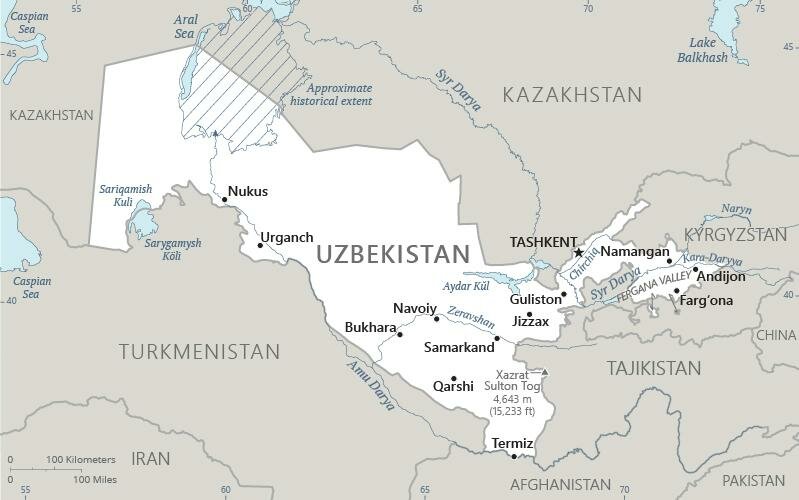
The U.S.–Uzbekistan early harvest gives Washington a new reciprocal-trade foothold in Central Asia while offering U.S. exporters prospective tariff gains in Uzbekistan. But the deal’s value will depend on the product schedules, implementation dates and whether the United States converts “favorable consideration” for Uzbek goods into concrete tariff treatment.

The Supreme Court has issued its second major Helms-Burton ruling in five weeks, strengthening the position of U.S. claimants seeking damages over property confiscated by Cuba after the 1959 revolution.

The White House’s quantum orders put compliance teams on notice that quantum risk is becoming a regulated control environment. Federal contractors should expect post-quantum cryptography requirements, cryptographic bills of materials, new FAR clauses, vendor-risk questions and vulnerability-disclosure obligations, while quantum-adjacent industries face closer scrutiny under export-control, investment-screening, supply-chain and research-security regimes.
The Netherlands’ pushback against expanded U.S. semiconductor-equipment controls shows the strain in Washington’s tech-security coalition: the United States is asking allies to tighten restrictions that fall heavily on their own national champions, even as it uses public money and equity-style investments to build domestic alternatives.

USDA’s proposed AFIDA rewrite would turn a long-standing foreign farmland disclosure regime into a sharper national-security reporting system, with electronic filings, geospatial land mapping, broader beneficial-ownership disclosures, tighter lease rules and steeper penalties. The proposal would move administration from FSA to USDA’s Office of Homeland Security, reflecting Washington’s growing concern that foreign agricultural land holdings—especially those tied to adversary governments or opaque ownership structures—pose risks beyond ordinary real estate oversight.

Iran’s postwar rebuild will turn less on battlefield conditions than on procurement. The report argues that Tehran’s damaged navy, shipyards, weapons plants and drone stocks will require foreign dual-use goods — from salvage equipment and CNC machine tools to drone electronics and marine engines — giving Washington and its allies a narrow window to disrupt supply chains before new routes through China, Pakistan, Turkey or the Caspian region harden. Its central policy recommendation is to adapt Russia-style anti-diversion tools to Iran, including “no reexport” clauses, third-country outreach and authority to restrict sales through suspected transshipment hubs.
The United States is pressing ahead with bilateral USMCA talks with Mexico, even as Canada remains outside the latest negotiating round despite formally submitting its own recommendations for the …
GAO’s report raises a management and accountability issue for one of Washington’s main soft-power tools against Beijing: Congress has directed at least $1.6 billion to counter Chinese influence, but State and USAID lack complete project data and have not assessed whether the overall portfolio is producing results.
The bill would create a new federal review process for foreign investment pledges tied to trade deals or executive-branch negotiations, shifting oversight beyond national-security screening to labor standards, domestic sourcing, ethics and economic benefit. The measure is aimed at ensuring that headline-grabbing investment commitments from countries such as Japan, South Korea, Taiwan and China translate into U.S. production and quality jobs, while limiting investments that could benefit foreign adversaries, undercut American workers or create conflicts of interest for U.S. officials.

A broad deemed-export approach could require companies to classify AI-related technology, screen personnel by nationality, segregate model access, seek licenses and audit internal use in ways many software companies have never had to do.

The Pentagon lobbying ban could force defense contractors to review ties with law firms and public-policy advisers that also represent Chinese military companies. The measure does not appear to bar ordinary legal work for both sides, but firms that lobby for companies on DoD’s Section 1260H list could become “covered lobbyists,” creating contract risk for defense clients that retain them.