

Continuing a a top-down policy of discouraging public participation in the policymaking process, the Bureau of Industry and Security will give the public only a brief window into its June 2 meeting of the Emerging Technology Technical Advisory Committee, continuing a broader shift toward more restricted industry-government engagement on export-control policy.
China’s next industrial-policy phase is no longer confined to manufacturing champions, electric vehicles or other “Made in China 2025” sectors. A new U.S. Chamber of Commerce report prepared by Rhodium Group says Beijing is moving toward an “industrial policy of everything,” extending state direction across upstream inputs, production equipment, mature manufacturing, frontier technologies and increasingly services.

President Trump has given the European Union until July 4 to implement last year’s U.S.-EU trade agreement, sharpening a transatlantic dispute that is already exposing divisions inside Brussels and complicating broader G7 efforts to coordinate trade policy against China’s dominance of critical mineral supply chains.
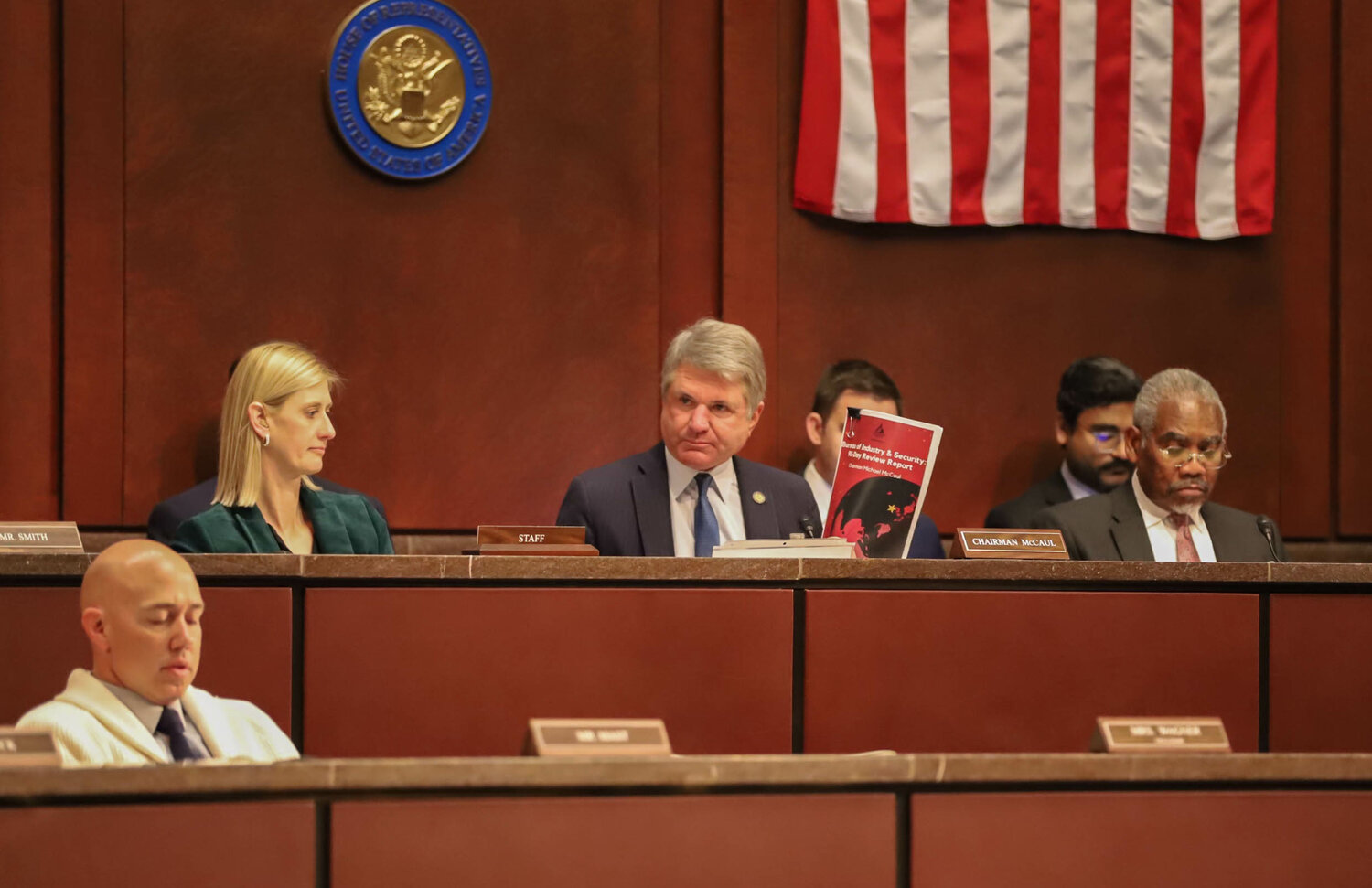
Legislation proposes to give the State Department standing authority to provide foreign military financing through loans and loan guarantees, extending the House committee’s broader effort to recast foreign arms sales as an industrial-base and burden-sharing tool.

The Trump-Xi summit opens with Section 301 again at the center of U.S.-China trade leverage. USTR is moving on two fronts: preserving the 2018 China tariffs through a new four-year review while testing whether “structural excess capacity” can support a broader generation of tariffs against China and other manufacturing economies. Beijing’s pushback is therefore not a narrow objection to one probe; it is an effort to prevent Washington from rebuilding tariff leverage after court rulings weakened Trump’s emergency-tariff tools. For importers, the risk is that a fragile trade truce may coexist with a more durable Section 301 architecture aimed at Chinese industrial policy, third-country sourcing and strategic manufacturing sectors.

House Select Committee on China Chairman John Moolenaar introduced bipartisan legislation Thursday May 7 to restrict purchases of U.S. farmland and other sensitive real estate by China and other foreign adversaries, extending a growing federal push to treat agricultural capacity as a national-security asset.

The Trump administration has approved a new tranche of emergency arms sales exceeding $8.6 billion to Israel and Gulf partners, extending a pattern of expedited transfers that bypass standard congressional review amid the ongoing war with Iran.
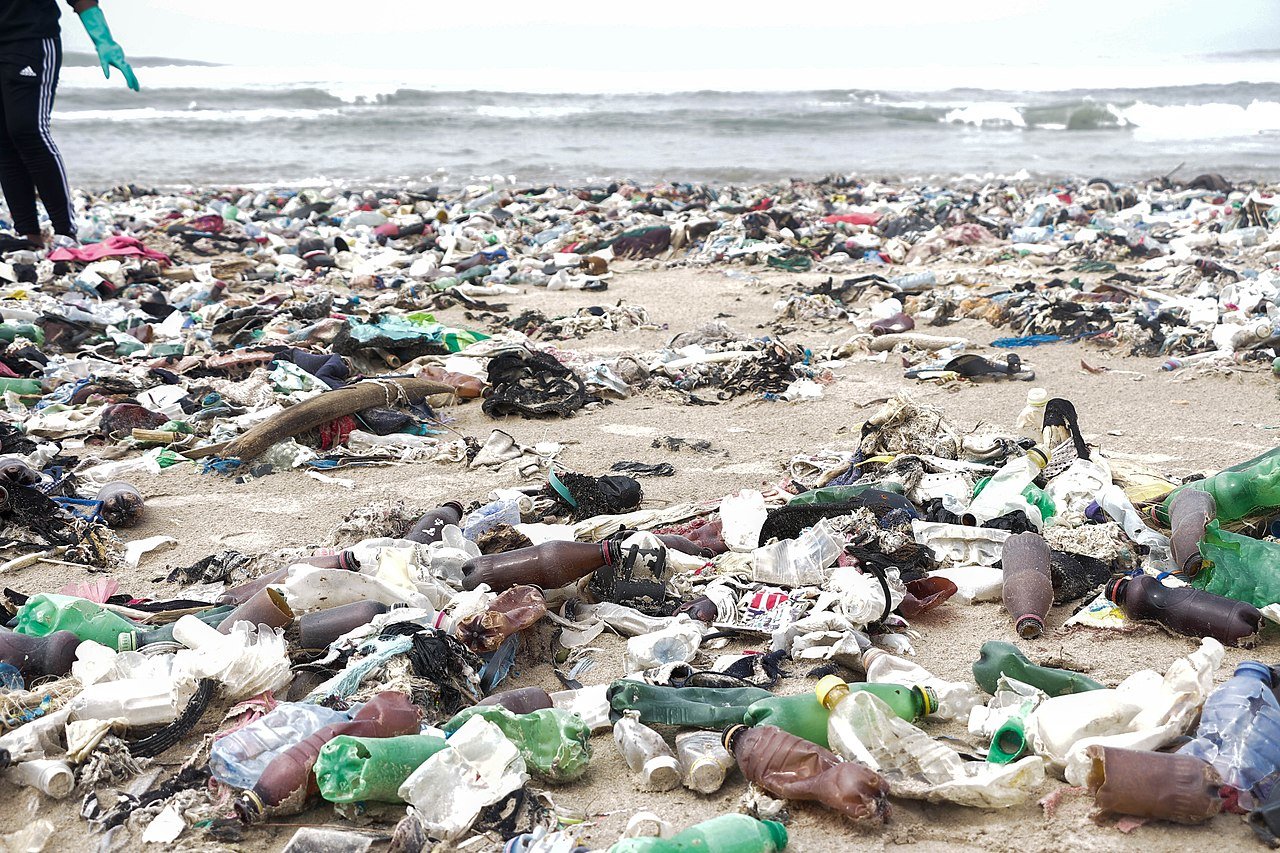
Recent oil-price volatility has exposed a structural bias in global trade: fossil-fuel-based plastics remain cheaper to trade than many natural substitutes, even when oil shocks drive up plastic input costs, according to a report from the UN Trade and Development agency.

U.S. Trade Representative Jamieson Greer said U.S. officials discussed a possible new “Board of Trade” with Chinese Vice Premier He Lifeng, framing the body as a government-to-government mechanism to manage bilateral commerce in “non-sensitive goods.”

The Federal Communications Commission voted Thursday to advance two China-focused national security proposals that would tighten control over the electronics-certification pipeline and further isolate major Chinese telecom carriers from U.S. networks.

USTR’s 2026 Special 301 Report designates Vietnam a Priority Foreign Country—the first PFC designation in 13 years—and starts a 30-day clock for a decision on whether to open a Section 301 investigation tied to IP enforcement failures, USTR said.
Ahead of the World Trade Organization’s General Council meeting May 6, Director-General Ngozi Okonjo-Iweala is struggling to come to terms with the failed 14th Ministerial Conference – an outcome …

Over 70 House Democrats called on President Trump to block Chinese automakers from accessing the US market, in a letter Wednesday emphasizing concerns over threats to US workers, manufacturing and …

The United States has aligned with Russia and China at the International Labour Organization in an effort to soften language condemning Moscow’s invasion of Ukraine, marking another break between Washington and European governments over how international bodies should describe the war.

As King Charles visits Washington to oil the waters, the keystone of U.S.-U.K. defense cooperation is showing frayed edges: The AUKUS submarine program faces “shortcomings and failings” that risk derailing delivery timelines and undermining partner confidence, according to a new U.K. parliamentary report.

The Commerce Department’s Bureau of Industry and Security is asking Congress for the largest expansion of its modern institutional life — a fiscal 2027 funding increase that would nearly double its budget and sharply enlarge the export-enforcement arm charged with keeping advanced U.S. technology out of the hands of China, Russia, Iran and other adversaries.

Foreign direct investment review is moving from a deal-clearance discipline to a strategic-technology control system. The latest signals are Japan’s rare move to halt MBK Partners’ proposed acquisition of Makino Milling Machine and China’s reported order unwinding Meta Platforms’ acquisition of Manus, an AI agent company.

President Trump sent to the Senate the nomination of Abby Warren, of Virginia, to be an Assistant Secretary of Commerce, the White House announced April 27. The notice did not specify the bureau or portfolio, but Senate/Commerce appointment trackers identify the slot as Assistant Secretary of Commerce for Export Administration, a key Bureau of Industry and Security post.
The fiscal cost of the Supreme Court’s IEEPA tariff ruling is coming into sharper focus: CBO Director Phillip Swagel says the Court’s decision could add roughly $2 trillion to deficits over 10 years, while the Trump administration’s substitute tariff measures may recover only $800 billion to $900 billion—leaving a net deficit increase of about $1.1 trillion.

Canada’s proposed new controls on semiconductor and advanced-manufacturing technologies are another sign that the United States and its allies are building a parallel export-control architecture for sensitive technologies where the Wassenaar Arrangement cannot move quickly enough.