
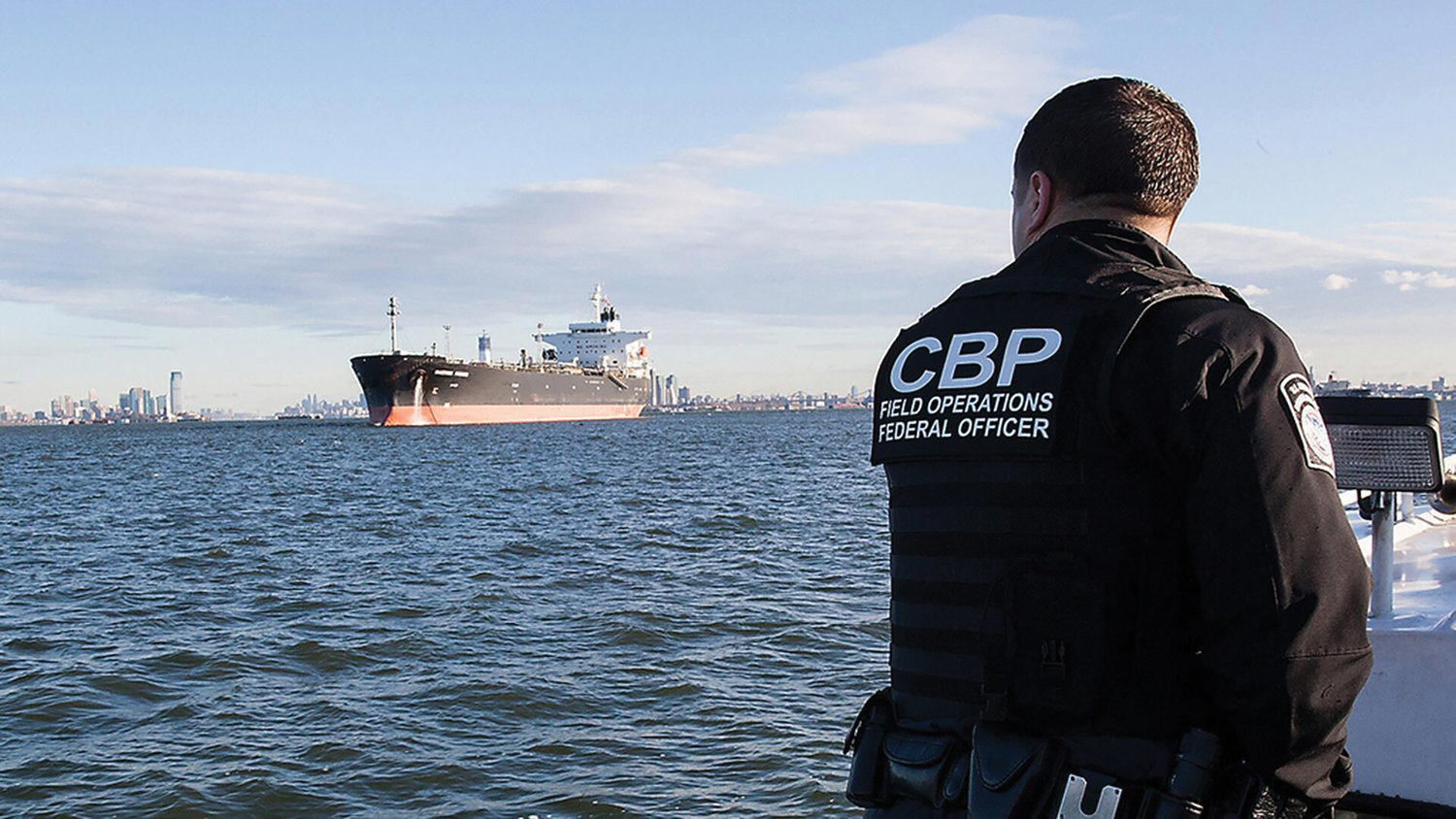
The new guidance raises the compliance burden for importers by making clear that forced-labor enforcement is no longer chiefly a Xinjiang-specific UFLPA issue, but a broader admissibility regime covering statutory bans, WROs, Findings and North Korea-related CAATSA enforcement.

The White House has invoked a rarely used Defense Production Act authority to let the Pentagon coordinate directly with defense contractors and suppliers on munitions production, citing fragile supply chains, limited capacity and long-lead bottlenecks that could impair U.S. military readiness. The June 11 presidential determination authorizes voluntary industry agreements under DPA Section 708, creating a supervised antitrust safe harbor for approved efforts to expand missile and munition output.

U.S. Customs and Border Protection may continue collecting the 10% global duties President Donald Trump imposed in February while the federal government appeals the U.S. Court of International Trade …
Tariff policy remains unsettled: CBP is paying some IEEPA refunds, the 10% global tariff remains collectible during appeal, China Section 301 duties await Supreme Court action, steel and aluminum rules are being revised, and Vietnam now faces a Special 301 investigation that could lead to new duties.

Canada’s proposed forced-labor import bill would mark a shift from supply-chain reporting toward border enforcement, giving Ottawa a chance to close a gap with the U.S. Uyghur Forced Labor Prevention Act and answer criticism that Canada’s existing ban has produced little visible enforcement.

The Army warning exposes a direct collision between Congress’s China-supply-chain crackdown and the Pentagon’s AI buildout. Broad restrictions on Chinese-origin equipment could slow military data-center projects that the Army says it needs to expand computing power for AI, autonomy and advanced weapons.

The Pentagon’s June 1260H update puts the China military-company list back at the center of U.S.-China technology controls after a withdrawn February notice created uncertainty over whether major commercial names would remain targeted. The final roster keeps prominent firms such as Alibaba, Baidu, BYD, CATL, COMAC, DJI, Tencent, WuXi AppTec, CXMT and YMTC on the list, while narrowing removals to 10 entities, including specific CNOOC and COSCO affiliates.
President Trump’s customs order turns importer identity into a central enforcement target, directing CBP to scrutinize who may act as importer of record, what domestic assets or bonds they must maintain, and what ownership and supply-chain information they must disclose. The order does not impose immediate new compliance obligations, but it sets up rulemakings that could sharply narrow foreign importers’ access to informal entry, raise bonding and documentation burdens, and make customs penalties harder to mitigate.
Canada has made new, detailed trade proposals to the United States while warning that talks may still face “turbulence,” adding momentum to a Canada track that had appeared to lag behind the U.S.-Mexico USMCA review process.
USTR is laying the groundwork for a more formal managed-trade channel with China, inviting companies to identify products that could be traded at lower tariff rates without undermining U.S. economic security, supply-chain resilience or national-security objectives. The notice signals a possible tariff off-ramp for selected non-sensitive goods, but only within a reciprocal, government-managed framework that preserves the administration’s use of tariffs as leverage against China’s non-market practices.
Trade compliance is no longer divided into clean import, export-control, and sanctions lanes. Export-control tools are appearing in sanctions programs; sanctions-style diligence is becoming essential in forced-labor and origin reviews; and tariff classifications once used mainly to set duty rates now can determine whether an export is lawful.
For importers, the immediate issue is not only the proposed 10 percent or 12.5 percent duty, but the prospect that forced-labor enforcement will become a standing trade-remedy tool layered onto existing tariffs, customs enforcement and supply-chain due diligence obligations.
The tariff cuts offer targeted relief for importers of machinery, agricultural equipment and construction-related goods, but they do not simplify the Trump administration’s metals regime. Instead, the White House is using lower rates to steer foreign manufacturers toward U.S.-origin steel and aluminum, while leaving companies to navigate a more granular system of product classifications, origin rules and country-specific trade-deal benefits.
The Justice Department is seeking roughly $286 million in unpaid tariffs and penalties from bankrupt auto-parts supplier First Brands Group, alleging the company undervalued imports from China to reduce duty exposure, according to a claim filed in the company’s bankruptcy case.
The stay fight is now a practical test of how much value the CIT victory has while the appeal proceeds. The plaintiffs say the government should not be allowed to keep collecting a tariff the trade court found unlawful, at least from the parties that won. The administration says even that limited injunction risks administrative disruption and follow-on litigation.

The Court of International Trade is pressing the government to explain how it will refund IEEPA duties on finally liquidated entries, especially millions of informal entries that may fall outside the first phase of CBP’s CAPE refund process.
The notice is a narrow tariff-implementation action, but it shows how the administration is using Section 232 relief as consideration in “trade and security” arrangements tied to industrial-policy commitments. For companies importing Taiwan-origin auto parts, wood products or aircraft components, the operative issue is not the broader Taiwan agreement, which remains unimplemented, but the May 1 effective date, new Chapter 99 reporting structure, and potential refund path for entries already made.

The authorization is an early public marker that OICTS is processing case-specific approvals under Commerce’s connected-vehicle rule, which targets vehicle connectivity systems and automated-driving software linked to China and other foreign-adversary jurisdictions.
CBP’s ruling gives automakers and importers a useful valuation marker for connected-vehicle services, holding that post-importation license fees for cloud-based navigation and content features were not dutiable additions to the value of imported passenger vehicles. The decision turned on the separation between the vehicle sale and the optional SaaS arrangement: the payments were made after U.S. sale, for consumer-facing content services, and were not a condition of the vehicles’ sale for export.
CBP’s annual Byrd Amendment notice is a narrow but still meaningful wind-down exercise for domestic producers that supported old antidumping and countervailing duty cases. Although Congress repealed the program nearly two decades ago, residual duties on pre-Oct. 1, 2007 entries remain distributable, giving eligible manufacturers one more opportunity to claim offsets — provided they file order-specific certifications by July 25 and can document qualifying expenses tied to the original trade remedy orders.