

The arguments Wednesday before the U.S. Supreme Court over the president’s authority to reshape import tariffs in response to international emergencies ranged from rousing questions about Congress’s ability to hold onto its trade mandate to talk of pastries. Here are the moments we’re still talking about.
The White House has formalized the economic framework reached by Presidents Donald Trump and Xi Jinping during their October 30 summit in South Korea, issuing two companion executive orders that suspend tariff escalations and recalibrate duties linked to China’s role in the global synthetic-opioid trade.

President Trump agreed this week to suspend for one year a contentious U.S. export-control measure that would have dramatically expanded the federal trade blacklist to include subsidiaries of sanctioned Chinese companies

The United States has finalized reciprocal trade agreements with Malaysia and Cambodia, formally released by the White House on Sunday, and advanced framework arrangements with Thailand and Vietnam.

The Trump administration is preparing a sweeping new export-control regime that would restrict shipments to China of any product made with, incorporating, or enabled by U.S. software—a marked escalation of Washington’s technology containment strategy.

Thursday, the U.S. Department of the Treasury’s Office of Foreign Assets Control (OFAC) designated Rosneft and Lukoil, Russia’s two largest oil producers, along with a broad network of their subsidiaries, under Executive Order 14024. The action imposes full blocking sanctions on these entities due to their operation in the energy sector of the Russian Federation.

The Trump administration is rapidly broadening tariff carveouts even as it deploys new duties under Section 232 of the Trade Expansion Act, signaling a strategic shift toward a managed exemption regime. While the administration continues to present tariffs as a pillar of national economic security, recent actions indicate increasing reliance on exemptions to shield politically sensitive sectors—and, critically, to insulate the U.S. defense industrial base from cost increases.
Global finance ministers and central bank governors concluded this week’s IMF–World Bank meetings in Washington with a cautiously optimistic outlook overshadowed by warnings that the current period of economic stability may be fleeting.
President Donald Trump responded on Friday to China's plans to limit exports of certain rare earth minerals with two lengthy social media posts accusing Xi Jinping's government of "lying in wait" throughout trade talks this year and promised reprisals. Citing what he described as China’s “hostile” actions, Trump announced a 100 percent tariff on all Chinese imports, “over and above any Tariff that they are currently paying.” ”

China has unveiled sweeping new restrictions on rare earth exports, expanding its control over critical minerals and tightening scrutiny of foreign semiconductor and defense users. The measures extend to dozens of refining technologies and mining equipment, while creating a new licensing regime that requires approval for foreign firms producing rare earth magnets or chips with trace amounts of Chinese-sourced materials.

Legislation introduced this week in Strasbourg would slash steel import quotas while doubling levies on shipments beyond those bounds, a proposal European Commission Executive Vice President Stéphane Séjourné called "a very restrictive clause that does not have precedent in Europe" but one that is "adequate for the situation."

The federal shutdown has left large portions of the Commerce Department shuttered, while the State Department’s Directorate of Defense Trade Controls (DDTC) has suspended nearly all licensing activity. The Bureau of Industry and Security (BIS), however, will continue most enforcement and "emergency" functions.
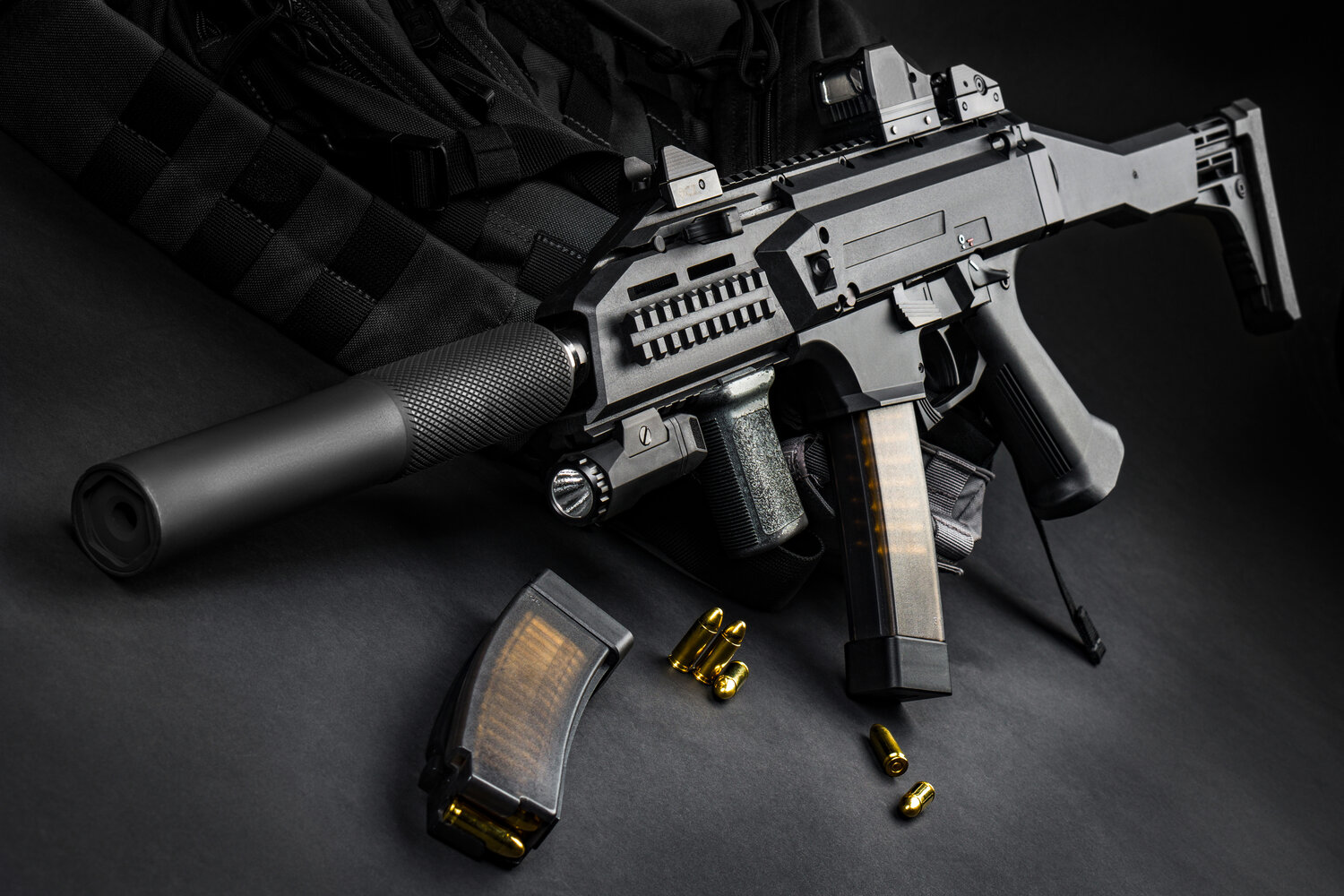
The Commerce Department’s Bureau of Industry and Security (BIS) has issued a final rule rescinding the April 30, 2024 Firearms Interim Final Rule (IFR), reversing most of the additional licensing and documentation burdens imposed on firearms exports. The only portion of the IFR retained is the creation of four new Export Control Classification Numbers
The Commerce Department’s Bureau of Industry and Security (BIS) has issued an interim final rule expanding U.S. export restrictions to cover foreign affiliates majority-owned by entities already subject to end-user controls. The rule aligns the Export Administration Regulations (EAR) with the Treasury Department’s longstanding “50 percent rule” applied to sanctioned parties.

Few practitioners today have followed trade’s evolution into a national security tool as closely as King & Spalding LLP partner Ryan Majerus, who joined the firm this year after more than a decade spent bouncing between the U.S. Department of Commerce, the Office of the U.S. Trade Representative and the White House. The Export Practitioner sat down with the former Acting Assistant Secretary for Enforcement & Compliance for a conversation, which has been edited for length and clarity, covering seismic tariff shifts, supply chains risks and taking an interdisciplinary approach to international trade.
Ambassador Greer and Treasury Secretary Scott Bessent pressed G7 finance ministers Friday to align with the Trump administration’s strategy of targeting countries that continue to purchase Russian oil.

Treasury Secretary Scott Bessent travels to Madrid this weekend to continue negotiations with the European Union, as Washington’s aggressive tariff policy compels allies and partners to weigh new concessions. Japan and South Korea show the challenges of negotiating with Washington, while the Swiss concede that things "had gone as they had."

The Government Accountability Office (GAO) sharply criticized the U.S. government’s sanctions and export-control regime against Russia, warning that federal agencies have failed to establish measurable targets needed to evaluate effectiveness.

The Trump administration reacted to the Federal Circuit’s ruling against the global “reciprocal” tariffs and other emergency duties this week, filing its appeal to the U.S. Supreme Court on Wednesday, a move that trade observers have expected since wine importer V.O.S. Selections Inc. and others launched their suits contesting the levies. The question now is how the high court will handle the petition, and how the administration will respond if the justices back the lower courts’ decisions.

Wall Street firms are eyeing a lucrative new market: buying up legal rights to tariff refunds from major American importers. As the U.S. Supreme Court prepares to hear a challenge to the legality of President Trump’s expansive tariff regime, financial firms are offering to purchase those refund claims at steep discounts—effectively betting that the Court will invalidate the levies and trigger multibillion-dollar payouts.