Top stories

Extreme Networks to Pay $2.02 Million Over Russian Defense Sales

The transactions benefited Moscow Machinery Building Plant Avangard, a manufacturer associated with Russia’s S-300 and S-400 air-defense systems.
The case shows how delayed disclosure and unresolved sanctions warnings can turn a modest sales account into a multimillion-dollar enforcement matter. Extreme’s cooperation and remediation secured DOJ’s first “near miss” non-prosecution agreement, but reporting only after a journalist presented new evidence cost it eligibility for a declination.
Seoul,South Korea
Senior Commerce Department officials have frozen expansion of a program that rewards foreign governments for adopting export controls comparable to those of the United States, rejecting South Korea and Vietnam despite recommendations from career staff. Officials also halted preliminary discussions with Saudi Arabia. The decisions leave those countries outside a licensing exception for selected quantum-computing, semiconductor, and advanced-manufacturing items.

Treasury Proposes Broader Outbound Investment Controls, Extending Restrictions to Biotechnology

The Treasury Department has proposed expanding restrictions on U.S. investment in sensitive foreign technologies, with consequences for technology companies, private investment funds, multinational businesses and drug developers. The October 22 proposal would broaden existing controls on semiconductors, artificial intelligence and quantum technologies while adding biotechnology, hypersonic systems and additional high-performance computing activities. 

EU Prepares Blocking Statute to Counter U.S. Sanctions on International Criminal Court

The proposed EU action would shield European banks, technology companies and other service providers from U.S. sanctions targeting the International Criminal Court, potentially creating conflicting legal obligations for firms operating in both jurisdictions. Brussels is preparing to extend its blocking statute as Washington presses the court to amend the Rome Statute to protect President Trump and other U.S. officials from prosecution.

Welcome to Your WTTL

The Washington Tariff and Trade Letter introduces a web-based format for easier review, research and sharing.  Clicking on a story in the newsletter will now bring you to the full text on our new web site. A .pdf version of the newsletter is available below.   For any questions about website access and your subscription, please contact us at Info@TradeRegs.com – Or call the Editor, Frank Ruffing, at +1.703.283.5220

The latest news

Treasury targets cryptocurrency exchange

On November 6, 2026, the Financial Crimes Enforcement Network (FinCEN) announced an order prohibiting U.S. financial institutions from transmitting funds to or from MEXC Global, a convertible virtual …
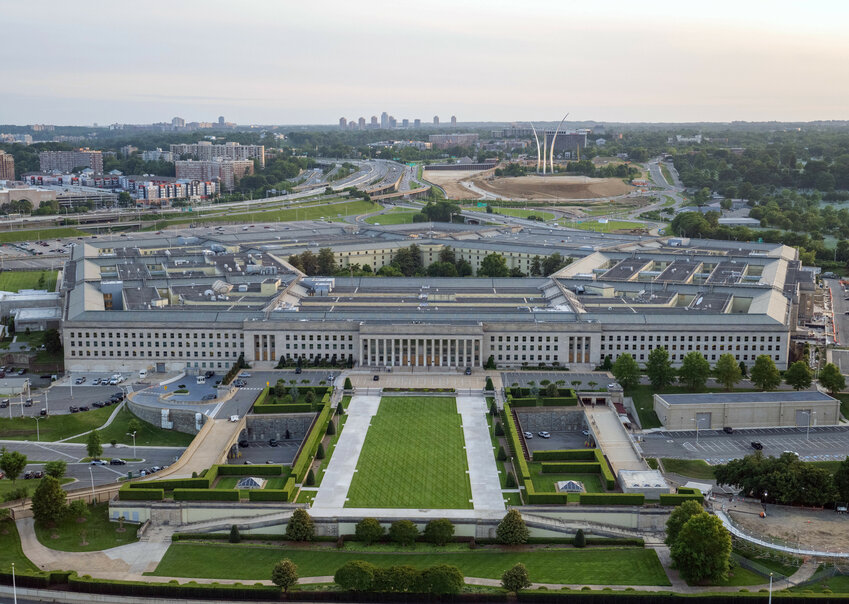
NDAA Returns to Congress With Export Controls, China Restrictions and Investment Security at Stake

Congress returns next week facing negotiations over the FY2027 National Defense Authorization Act, with significant export-control and economic-security provisions awaiting resolution.
More trade & tariff news
U.S. Court of International Trade in New York.

CIT requests import-country lists in Section 301 forced-labor tariff litigation

The Court of International Trade three judge panel considering a challenge to President Trump’s decision to impose Section 301 tariffs on countries for failure to keep products made with forced labor out of their markets is asking the plaintiffs involved to provide lists of the countries whose products they import.

BIS Extends Affiliates Rule Suspension Through January 10

The extension confirms that the Affiliates Rule suspension will continue through January 10, resolving uncertainty over whether it was covered by the extended U.S.–China trade truce. Companies gain two months to strengthen ownership screening and due diligence, but the underlying rule remains intact: BIS has deferred the expanded controls, not withdrawn them.

Democratic Committee Takeovers: More Investigations, Limited Tariff Relief

The midterm elections have set the stage for sustained congressional scrutiny of the Trump administration’s trade policies. Incoming Democratic chairs will gain the means to investigate tariff decisions, sanctions waivers, export licenses and sensitive investments, as well as companies’ dealings with the administration. But presidential veto power and bipartisan support for restrictions involving China will limit how far Congress can change the underlying policies.

Post-Quantum Security Prep

New federal guidance makes post-quantum security a business planning issue today. NIST has outlined the transition from vulnerable cryptography, while CISA and its partners have published questions to help enterprises assess whether their technology suppliers can deliver the necessary changes.
On the calendar
China’s reported move to block SoftBank’s acquisition of ABB’s robotics business underscores the growing importance of Chinese approval for transactions between non-Chinese companies.
Is the United States Abandoning Oversight and Reporting on Defense Industry Offsets? Brian Hobbs PhD, PMP   …
The U.S. trade deficit narrowed marginally in September as exports increased slightly faster than imports, but a continued surge in computer and capital-goods imports kept the monthly imbalance above …
The lawsuit moves scrutiny of TD’s compliance failures beyond the branch employees prosecuted for facilitating money laundering to the disclosures and oversight responsibilities of senior management.
“Only three years ago, the US was a net exporter of tech products!” wrote James Knightley, ING’s chief international economist for the United States.

OFAC Issues Wind-Down License for Iraqi Bank

The U.S. Treasury Department’s Office of Foreign Assets Control issued Iran General License FF-1 on October 29, 2026, authorizing qualifying transactions necessary to wind down dealings with International Development Bank for Investment and Finance, also known as Iraq Development Bank. 

DHS Adds Chinese Genomics Companies to Forced-Labor Import Blacklist

The October 29 designation adds a customs-enforcement dimension to Washington's expanding biotechnology national-security framework, with implications for sequencing equipment, genetic-data services, research partnerships and supply-chain due diligence.

North Korean IT Worker Fraud Cited

Treasury’s October 28 sanctions action underscores how North Korean IT worker schemes expose U.S. businesses to sanctions liability, data theft, and extortion through seemingly legitimate hiring.

FCC Bars Chinese Testing Labs, Citing Security and Trade Reciprocity

The FCC’s decision marks a significant shift in U.S. electronics regulation, replacing reliance on internationally accredited testing laboratories with a system conditioned on trade reciprocity and regulatory oversight. By December 2028, manufacturers must move FCC certification testing out of China and other nonreciprocal economies, potentially increasing compliance costs and disrupting established supply chains