
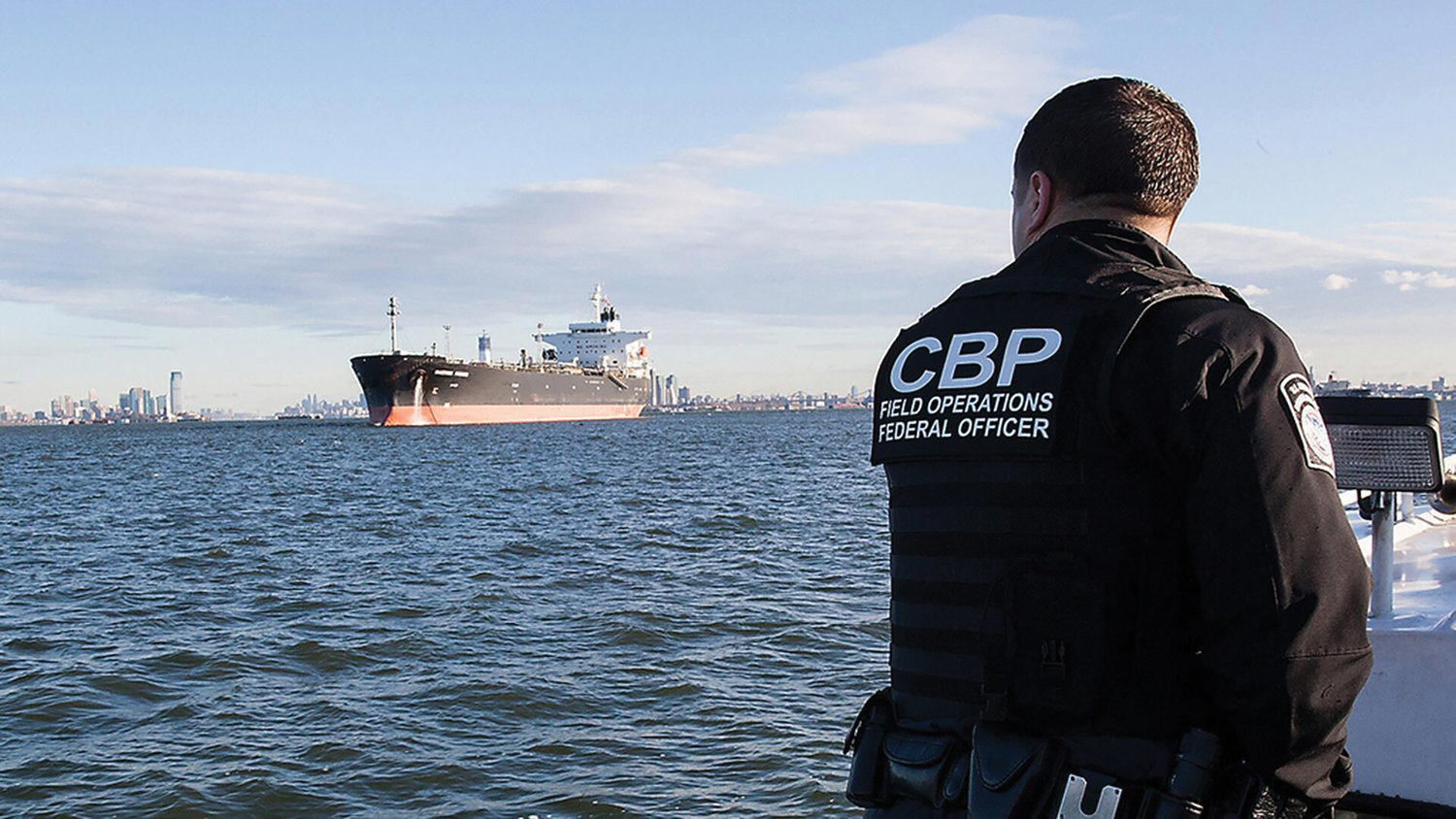
President Trump’s customs order turns importer identity into a central enforcement target, directing CBP to scrutinize who may act as importer of record, what domestic assets or bonds they must maintain, and what ownership and supply-chain information they must disclose. The order does not impose immediate new compliance obligations, but it sets up rulemakings that could sharply narrow foreign importers’ access to informal entry, raise bonding and documentation burdens, and make customs penalties harder to mitigate.

As Washington narrows FCPA enforcement, the OECD’s new report warns that foreign bribery risk is not receding but dispersing. Multijurisdictional resolutions—coordinated settlements among prosecutors and regulators in several countries—are becoming the dominant enforcement model, with demand-side countries increasingly seeking penalties, restitution and compliance commitments of their own.
The Treasury Department’s Office of Foreign Assets Control imposed a $1.05 million settlement on FTI Consulting Inc. in a Russia sanctions case that compliance practitioners say illustrates the danger of relying on formal deal structure when the underlying economics point to a prohibited transaction.
The Justice Department is seeking roughly $286 million in unpaid tariffs and penalties from bankrupt auto-parts supplier First Brands Group, alleging the company undervalued imports from China to reduce duty exposure, according to a claim filed in the company’s bankruptcy case.
BIS’s dismissal of an appeal by a Belgian businessman and his company is procedurally narrow, but its compliance lesson is broader: an expired, non-renewed temporary denial order cannot be used as a vehicle for collateral relief under EAR § 766.24, even where the respondent disputes the factual basis for the original order. The decision also underscores the separate legal effect of BIS tools. A temporary denial order may lapse, but later Entity List restrictions, OFAC sanctions and criminal proceedings can continue to carry the operative compliance risk.

Yana Leonova, a 33-year-old Belarusian national extradited from France, pleaded guilty May 20 to illegally exporting U.S.-origin aircraft components to Russia through a multinational procurement and transshipment network.

The Commerce Department’s Bureau of Industry and Security imposed a $72,750 civil penalty on Colt’s Manufacturing Company LLC to settle six alleged antiboycott violations arising from the company’s participation in Middle East defense trade shows.

U.K.-based yacht manufacturer Sunseeker International Ltd. and its U.S. affiliate Sunseeker USA Sales Co. Inc. pleaded guilty to two Lacey Act violations for using illegally obtained Burmese teak on luxury yachts imported into the United States, the Justice Department said May 13

U.S. authorities are moving to end the federal fraud cases against Indian industrialist Gautam Adani, a sharp reversal in a matter that had threatened one of India’s most politically connected conglomerates and raised questions about the reach of U.S. anti-bribery and securities enforcement abroad.

The Justice Department’s $549.5 million Perfectus Aluminum settlement turns a decade-old customs-evasion case into a current warning for importers: trade-remedy duties can produce False Claims Act exposure when entry descriptions, end-use claims and related-party sales are used to avoid AD/CVD liability.
The Justice Department’s new fraud division is emerging as the prosecutorial engine for President Trump’s March order creating a White House Task Force to Eliminate Fraud, but recent reporting suggests the reorganization may reach beyond benefit-fraud cases into the broader white-collar enforcement infrastructure.

British defense contractor Ultra Electronics agreed Friday to pay £14.8 million to resolve a Serious Fraud Office bribery investigation tied to public-sector contracts in Algeria and Oman.

The Justice Department’s Civil Division is moving to triage the growing wave of False Claims Act complaints filed by “data miners,” warning that public-data anomalies must be tied to legally sufficient fraud allegations before DOJ will devote enforcement resources to them.

The Commerce Department’s Bureau of Industry and Security has imposed a $44,750 civil penalty on Thales Defense & Security, Inc., resolving allegations that the Maryland-based defense company furnished prohibited boycott-related information and failed to report a boycott request tied to 2019 UAE trade documentation.

he Boise Cascade case extends a major Lacey Act prosecution from the importers who orchestrated a plywood smuggling scheme to a downstream corporate buyer that DOJ says knew, or was willfully blind to, the illegal origin of the products. The prosecution underscores how Lacey Act declarations, customs-law compliance and antidumping/countervailing-duty exposure now converge in timber and wood-products supply chains.
NAVEX’s 2026 Whistleblowing & Incident Management Benchmark Report is a useful, data-rich review of the state of internal reporting programs, but its real value for compliance practitioners lies less in the headline numbers than in the operational stress signals beneath them.

A Paris criminal court’s conviction of Lafarge and eight former executives sharpens a compliance lesson already underscored by the company’s 2022 U.S. guilty plea: payments framed as security, transit, or operating costs in a war zone can be recast by prosecutors and judges as terrorism financing, sanctions evasion, and senior-management misconduct when a company chooses to keep business running under armed-group control.
Two new settlements Commerce's Bureau of Industry and Security reached with technology and defense companies came to light on Tuesday, as the agency posted a $1.7 million deal covering years of shipments to SMIC and a smaller deal addressing anti-boycott violations.
As boards and C-suites absorb Anthropic’s warning that frontier AI systems may sharply accelerate the discovery and exploitation of long-buried software flaws, the Justice Department’s latest Russia case is a reminder that old-fashioned cyber defense and disruption still matter.

Before the semiconductor tensions of the 2020s and the export control reforms of the 2010s, Mario Mancuso led the Bureau of Industry and Security in the final years of the Bush administration — pushing the agency toward greater prominence and deeper national security impact.