
The United States and India agreed on a bilateral trade package on February 2, 2026, substantially reducing U.S. duties on Indian imports and seeking to resolve a prolonged dispute rooted in energy sourcing and tariff policy. The accord follows months of diplomatic strain after Washington imposed steep reciprocal and punitive tariffs in 2025 linked to India’s continued purchases of Russian crude.

January marked a consolidation phase in the Trump Administration’s economic-security agenda. A cluster of strategy documents, senior-level speeches, and analytical reports—released within weeks of one another—revealed a common premise: trade, technology, defense, and industrial policy are no longer separable domains.

The World Economic Forum opened this year under a shared recognition that the post-Cold War economic settlement is no longer operative, but with little agreement on what should replace it. Across Davos, senior officials framed geopolitics, trade, and industrial policy not as domains to be reconciled, but as instruments to be asserted—revealing a widening gap between those seeking to rebuild cooperation through new coalitions and those prepared to test leverage openly, even among allies.

As law firms, consultancies, and risk advisers circulate their annual “top issues for 2026” publications, a clear pattern emerges. While the subject matter spans customs, sanctions, export controls, AML, and enterprise risk, the underlying message is consistent: compliance risk in 2026 is broader, faster-moving, and more strategic than ever before.

Panama’s Supreme Court has unanimously voided the concession allowing a unit of Hong Kong–based CK Hutchison Holdings to operate the Balboa and Cristóbal ports at either end of the Panama Canal, ruling that the contracts violated the country’s constitution and failed to serve the public interest.
The Trump administration is pairing new, “reciprocal” trade arrangements in Central America with a harder-edged regional posture that links market access, supply-chain integration, and security cooperation, and using visa restrictions as a pressure tool in Haiti’s political crisis.

The Trump administration on Friday approved a series of major arms sales—most notably $6.67 billion in military equipment to Israel and an additional $9 billion sale of Patriot missiles to Saudi Arabia—issuing notifications to Congress that effectively bypass the traditional legislative review period.

A World Trade Organization (WTO) dispute settlement panel has ruled that several tax incentives adopted by the United States under the Inflation Reduction Act (IRA) contravene core WTO obligations, finding them discriminatory and prohibited as subsidies under WTO law.
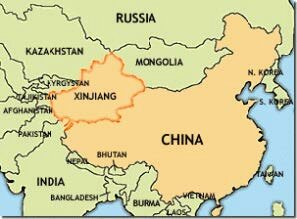
Customs data show a sharp decline in the value of shipments detained under the Uyghur Forced Labor Prevention Act (UFLPA) during calendar year 2025, as well as no new Entity List additions since the change in administrations.

Global digital trade is increasingly being driven not by finished consumer electronics or online retail services, but by semiconductors, electronic components, and the services tied to intellectual property (IP) and software, according to data from UN Trade and Development (UNCTAD) and national statistical authorities.
The State Department’s Pax Silica initiative is emerging as the Trump administration’s central organizing framework for economic security in the age of artificial intelligence, blending supply-chain strategy, export control alignment, and industrial cooperation into what senior officials describe as a “coalition of capabilities.”

President Trump on Thursday escalated tensions with Canada, accusing Transport Canada of delaying certification of several Gulfstream business jets and threatening retaliatory measures against Canadian-made aircraft.

The European Union and India have concluded a landmark Free Trade Agreement (FTA), creating one of the world’s largest bilateral trade frameworks and opening a combined market of nearly two billion people. European Commission President Ursula von der Leyen has described the accord as the “mother of all deals,” underscoring its breadth across goods, services, sustainability, and small-business integration.

In a move that may reshape the geopolitics of ocean resource governance, the United States has quietly introduced a new fast-track permitting regime for deep-sea mining, drawing sharp attention from legal experts and international observers.

The Census Bureau and Bureau of Economic Analysis reported Thursday that the U.S. goods and services trade deficit expanded significantly in November 2025, reversing the prior month’s narrowing. The deficit increased to $56.8 billion, up $27.6 billion from a revised $29.2 billion in October.

The Trump administration issued a general license Thursday easing U.S. sanctions on Venezuela’s energy sector, a move intended to accelerate oil exports and investment but one that also raises complex legal and compliance questions for companies engaging with the country’s oil industry.

As Congress approaches the midnight January 30 deadline to avert a lapse in funding for the Department of Homeland Security (DHS), the prospect of a partial government shutdown has heightened concerns about the continuity of U.S. Customs and Border Protection (CBP) operations.
A Supreme Court decision invalidating President Trump’s “Liberation Day” tariffs would set off an immediate operational response by importers, followed by a rapid policy recalibration inside the administration and renewed focus on whether the Department of Commerce—particularly the Bureau of Industry and Security (BIS)—has the capacity to migrate tariff policy from emergency powers to conventional trade statutes.

The State Department’s Strategic Plan for Fiscal Years 2026–2030 places trade, industrial capacity, and technology control at the center of U.S. foreign policy, framing economic policy explicitly as national-security strategy.

In a speech at the Sejong Institute in Seoul on January 26, Under Secretary of Defense for Policy Elbridge Colby articulated a foundational shift in U.S. strategy toward Asia, framing defense policy as intertwined with economic statecraft and trade.